Tombazis: I wouldn't claim total success with outgoing regulations
F1 NewsMonday, 15 December 2025 at 07:33
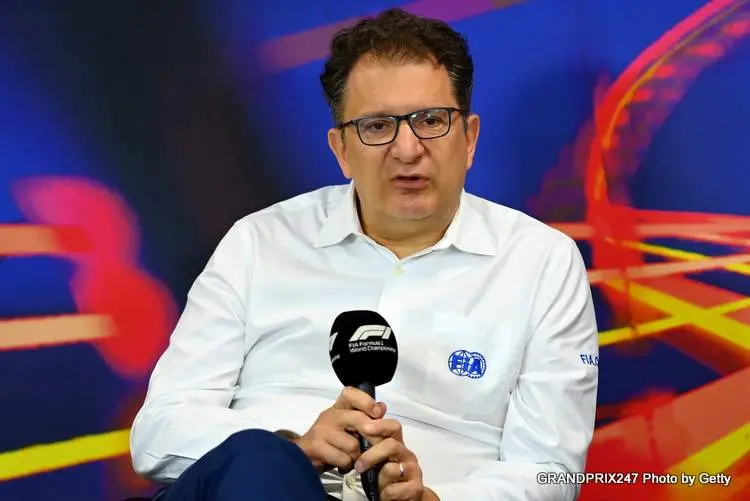
The 2025 Abu Dhabi Grand Prix was the final Formula 1 race under the set of regulations the sport introduced back in 2022 with ground effect cars aiming to improve the racing in addition to improved financial sustainability.
And while early signs showed that the FIA and Formula 1 hit the nail on the head with the regulations, the manner in which the cars evolved under them between 2022 and 2025 meant cars once again started facing issues when chasing other cars on track, something the governing body's single-seater director, Nicholas Tombazis, acknowledged.
Speaking in Abu Dhabi, Tombazis was asked to assess the success of the outgoing set of rules; he said: "I think we've made a significant step in the right direction on most of these aims.
"But I certainly wouldn't claim total success on everything, so I wouldn't give us an A star. I would give us a B or a C, or something like that.
“I would certainly say that we cannot even imagine not having the financial regulations now. So I think that has been a success," he claimed.
Despite all efforts, there were loopholes in the rules

Reflecting on the racing part of the regulations, Tombazis, a former Ferrari engineer, said: "The technical side, I think yes, definitely cars did get to a point where they could race each other more closely [early in the rules].
"Where we don't give ourselves full marks, is that there were a few, I wouldn't quite call them loopholes, but there were certainly some areas of the regulations that were a bit too permissible let's say.
"And that enabled teams to adopt solutions which created outwash," he admitted.
"The main areas were first of all the front wing endplate," the FIA director added, going into more details. "The front wing endplate was originally planned to be a very inwashing device.
"Gradually, all the ruling to do with how the profiles go around and join into the endplate, that was not tight enough. It led to profiles being quite outwashing in that area and creating a lot of outwash.
“The other area where they exploited a lot was the drum design of the front wheel, the furniture on the inside of the front wheel. And I would also say the edges of the floor were in that category. These were the main areas of performance deterioration from the intent of the rules," he explained.
Why not react to teams' taking advantage?

Tombazis revealed that the FIA tried to react to the teams' exploitation of the loopholes; he added: "These areas I mentioned, it's not like that is something new today.
"It was also the case two years ago. Why we didn't [change the rules]? Well, we tried, but we didn't have enough support among the teams.
"It needs governance to change regulations during a cycle—and therefore it means that a large number of teams need to support certain changes. It's not just us wanting to do something," he lamented.
As for the new set of rules that will be in effect from 2026—new chassis and power units—Tombazis was wary of making any predictions on how successful they may be.
"The outwash, we obviously believe that it will be better, but let's have this discussion in two years, and hopefully we will tell you that it was all OK and we will be all smiling," he commented in conclusion.
Latest News
Loading