Most F1 drivers won't miss fastest lap point but how about one for pole?
F1 NewsFriday, 18 October 2024 at 12:43
Formula 1 drivers expressed their opinions on the recent decision to remove the point awarded for the fastest lap during a Grand Prix since 2019, at a time when "improve-the-show" was the paddock buzzword, mostly applauding the move, with an inevitable exception.
The move was approved by the FIA World Motor Sport Council ahead of the United States Grand Prix. As the 2024 season heads into its final races, drivers were asked about the change during an FIA-hosted press conference at Circuit of the Americas (COTA), offering varying perspectives on the impact of this regulation tweak.
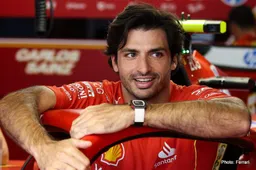
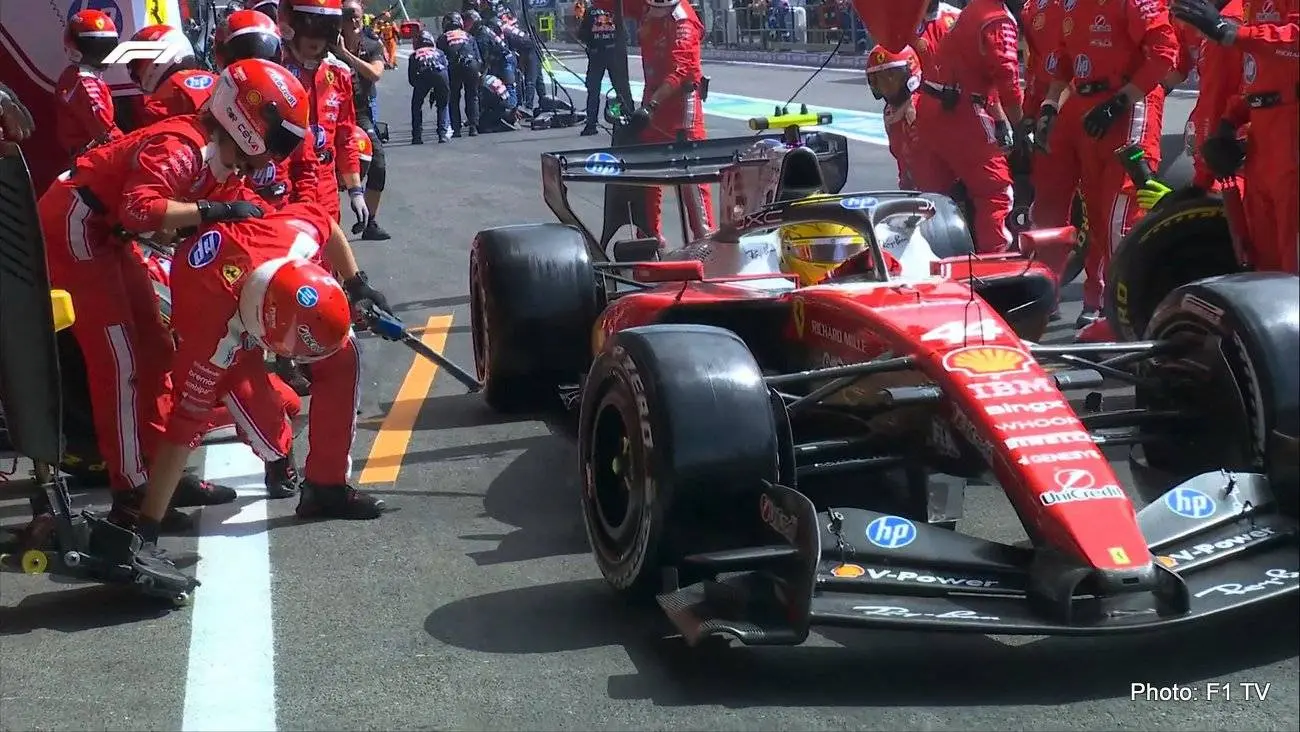
Carlos Sainz, who will leave Ferrari at the end of the season, has been critical of the fastest lap point for some time and welcomed its removal. According to the Spaniard, the way the point is currently earned often has little to do with real racing performance and more with race circumstances that allow a driver to make a late pit stop for fresh tyres.
Sainz explained: "I always was of the opinion that it was a not-needed point in the points system of Formula 1, mainly because of how it is achieved. Right now, that point goes to the one that has a free pit stop one lap to the end of the race. So it's not showing who is the fastest guy in the race, and he deserves one point for being the fastest guy.
"It's a point that goes to the guy that by chance or by luck or by race situation has a free pit stop at some point of the race. It's not always the case. Not always, but in a lot of occasions, most of the time."
Sainz: Pole position in F1 is something that is given a lot of value

For Sainz, a more meaningful way to distribute additional points could be linked to pole position, where a driver’s skill in qualifying is put to the test: "Pole position is something that, at least in Formula 1, is given a lot of value.
"In a tight field, it makes sense. In a field where only one car is going to get all the pole positions, it makes less sense. But in the ideal scenario of a tight field and one guy going for it in qualifying and getting that pole position, I think it could make more sense than the fastest lap of the race," added Sainz.
Alpine’s Esteban Ocon echoed Sainz’s view that pole position, rather than fastest lap, would be a better reflection of a driver’s ability deserving of a point: "I join Carlos. Being on pole is something very important to us and I think to all of you guy.
"It's something that we put a lot of effort on, and that is very rewarding. On the race, we race to win. You don't necessarily race to be fastest on one lap," ventured the Frenchman.
Ocon also emphasized that while the fastest lap point sometimes feels out of place in the context of a race, rewarding a driver for their qualifying performance could make more sense: "For pole position, it would be much more rewarding, and that's something I would prefer."
Magnussen: Fastest lap point is something that very rarely is on our mind

For Kevin Magnussen of Haas, the fastest lap point has rarely been a factor in his race weekends. The Danish driver admitted that: "From the perspective of a midfield team, I think it's something that very rarely is on our mind. If we're in the top 10, even if you're P6, or P7, it's very rare that you will have a pit stop gap to go with what Carlos says. For us, it's never been relevant."
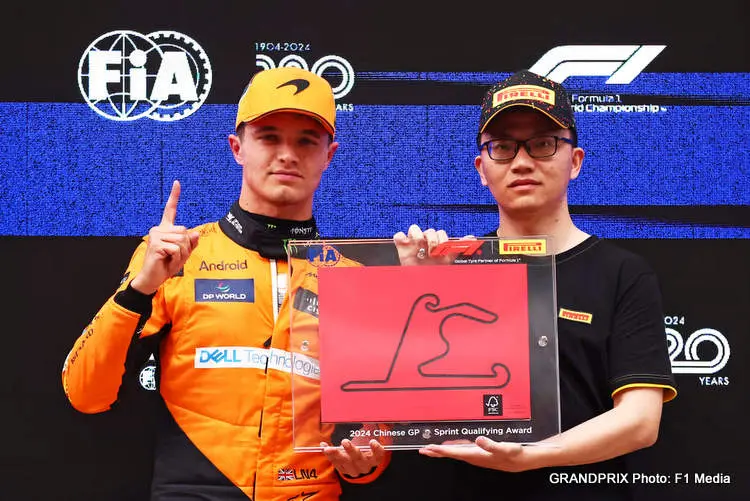
While Sainz, Ocon, and Magnussen favour the change, McLaren’s Lando Norris offered a more neutral take on the matter. Norris suggested that the fastest lap point added a layer of strategy and risk that he found intriguing, though he admitted it could be problematic if race scenarios made it too predictable.
"I kind of liked how it is now. I mean, you know, there's an opportunity to go for something else. Sometimes you pay the price for risking such a thing, and it's always been a risk in certain scenarios. If your pit stop goes wrong, you know, different reasons," said the McLaren driver.
Norris: This should not be about Singapore

However, Norris acknowledged that the removal might have been influenced by recent races where the fastest lap point became too easily manipulated, such as at the Singapore Grand Prix: "The thing is, if it's such a case, then it's like we had in Singapore or something like that, that's repetitive, then I think it's the correct thing to do.
The Briton referencing Ricciardo's swansong shot at the fastest lap point, which he got for VCARB, denying Norris an extra point and thus aiding Red |Bull's Max Verstappen in this season where a point or two may decide where the 2024 F1 Drivers' title ends up
"But I don't know. I don’t feel like they should change it just because of people questioning it after Singapore," insisted Norris, who seemed less concerned with the rule change, adding that the decision was more about team strategy than individual drivers: "It was all a team manager thing. So yeah, it's got nothing to do with us."
The removal of the fastest lap point marks a significant shift in how points are awarded in Formula 1, particularly for teams who have previously relied on this bonus to gain an advantage in the championship standings.
The drivers’ mixed reactions highlight how the rule change could affect strategies going forward, with some seeing it as an unnecessary quirk of modern racing, while others believe it added a unique element of risk and reward.
As the season progresses, the effects of this decision will become clearer, with the potential for further discussions on how to best reward drivers for their efforts on track, beyond the Grand Prix race itself.
Latest News

Loading