Editor's Desk: Red Bull slower or Ferrari and McLaren got faster?
F1 NewsMonday, 03 June 2024 at 09:11
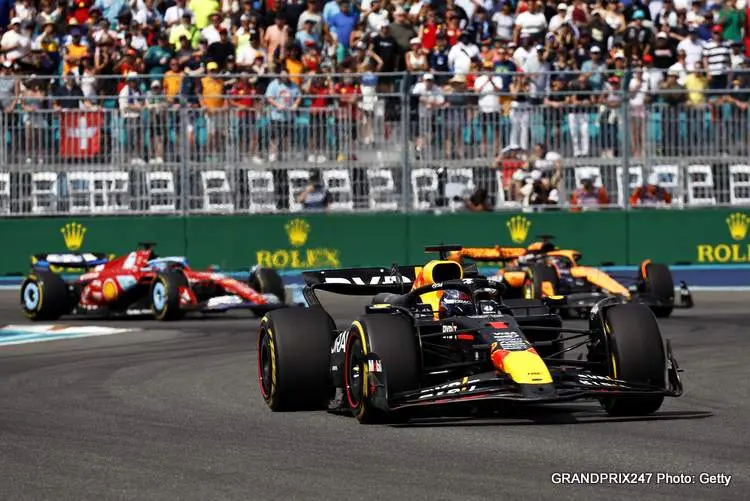
Red Bull's dismal Monaco Grand Prix weekend has raised questions about the form of the energy drinks outfit in 2024 so far.
Red Bull have ruled over Formula 1 since the start of the current era of "ground effect" aero regulations, and while initial sign early in 2024 hinted at another stroll towards a third consecutive Title double with Max Verstappen, eight races into the season, the picture is starting to change.
And while the Adrian Newey-designed machinery have been dominant since 2022, they have nevertheless shown some vulnerability at certain race, ones with slow corner and bumps to be precise, Monaco and Singapore to be more precise.
With that in mind, Verstappen has struggled to get on terms with his RB20 since Miami, and while that race was by no means a disaster - Sprint pole and win, pole position and second in the race - the trend of struggling to get on top of the car's handling continued for Imola after that.
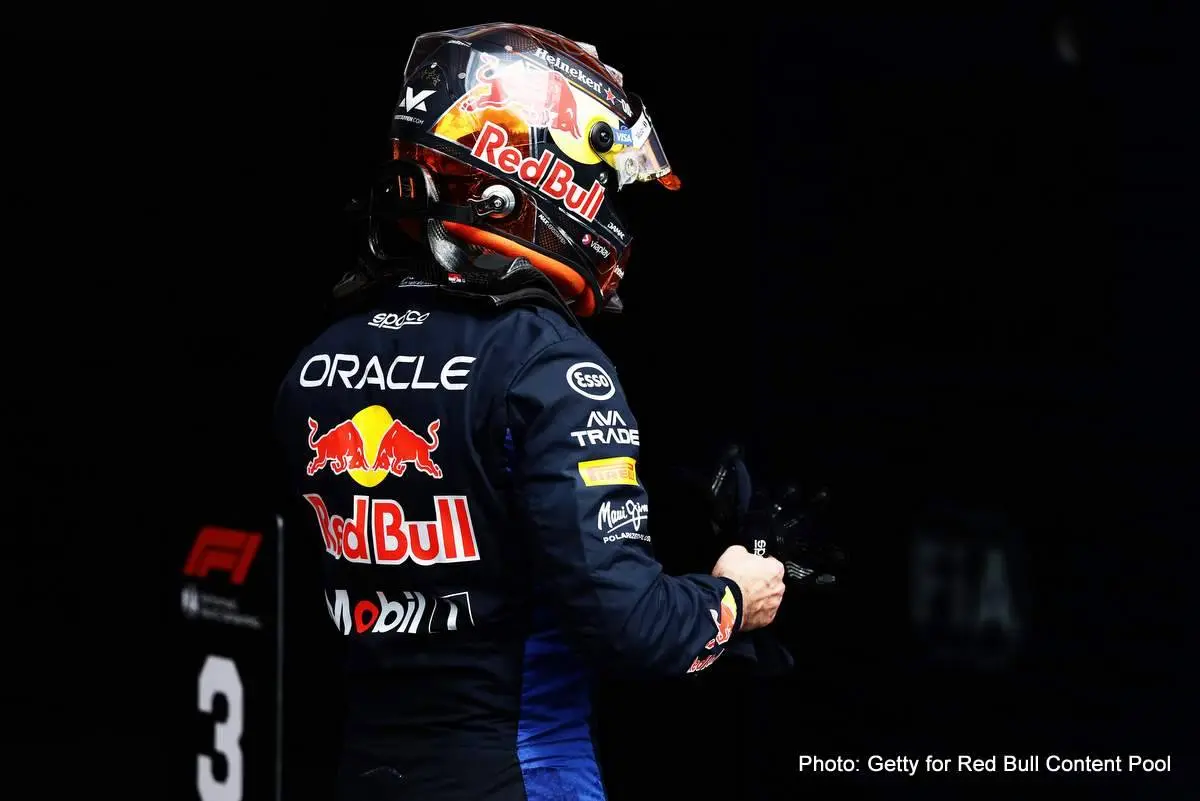
But then the Dutchman and his RB20 hit a low in Monaco, sixth in qualifying and the race, as the much-hailed Red Bull suspension failed to deliver the performance around the streets of the principality.
Red Bull boss Christian Horner admitted after Monaco that his engineers had some head scratching to do to find the root cause of their troubles while noting that sister team VCARB, running the 2019 Red Bull suspension, did not face ride issues, while Verstappen complained his RB20 drove like a go-kart.
Have Red Bull ruined their car?

After Verstappen and the RB19 wiped the floor with the competition in 2023, Red Bull turned up with a radically evolved car for 2024, taking their design philosophy to the limit with extremely undercut sidepods, a decision many questioned the wisdom behind it.
But have they ruined their car? Well the answer for that is simple: No.
However, it seems the RB20 has retained the DNA that makes it malfunction around tracks like Monaco, with Singapore later this year an interesting case study to look out for.
Looking at simple math and specifically in Monaco, the Red Bull cars have gotten better from 2022, 2023, coming into 2024.
If you recall, Verstappen struggled in Monaco in 2022, and qualified fourth with a 1:11.666 with Leclerc taking pole with a lap time of 1:11.376. Sergio Perez, who went on to win that race, qualified third fastest posting a 1:11.629.
In 2023, Verstappen was on pole his best lap time (1:11.365) being three tenths better that his best effort a year earlier, not a massive improvement given how much better the RB19 was compared to the RB18, but then Monaco was always going to be a weak track for Red Bull.
Fernando Alonso was less the a tenth behind in second. Leclerc was over a tenth off pole in third (1:11.471), and Verstappen went on to win that race.
Enter Monaco 2024, and Verstappen was nowhere to be seen, sixth in qualifying and the race that was won by Leclerc from pole.
But the triple F1 Champion's qualifying time which was only good enough for sixth in 2024 was almost eight tenths of a second better that his pole time in 2023!
However Leclerc's 2024 pole time, a 1:10.270, was over a second better than Verstappen's pole time one year earlier and over 1.2s better than his own time for third in 2023!
It's McLaren and Ferrari that have become better

So the Red Bull car has not gone slower, while Ferrari and McLaren have become faster finding bigger chunks of performance, which is normal, as they were able to find more lap time since they were so far behind in 2022 and 2023, while Red Bull could only find small increments of performance having started off so strongly at the start of the current set of regulations.
Now it is worth noting that I haven't mentioned McLaren in the aforementioned comparison as they were not in contention in Monaco back in 2022 and 2023, but their form in Imola and Miami proves that they have closed the gap on Red Bull as well.
So simply said, Red Bull kept their development curve going upward but its slope is not as steep as those of Ferrari and McLaren something that gives more credit to Horner's statement about designs converging and the gaps closing as well.
This means, that Red Bull will still hold an advantage, especially in race trim, on tracks that have suited them historically but not by a huge gap as Ferrari and McLaren have definitely caught up with them. On the other hand, their weaknesses will now be magnified by the improvement of the rivals on tracks that do not favor their RB20, Monaco being the most recent proof, and Singapore will probably validate this statement.
As for Canada, it will be interesting, as there will be a need to ride the kerbs, something the RB20 and Verstappen will be dreading even before the weekend begins, but maybe the long straights will make things less worse given the Red Bull's efficient design.
As for the rest of the season, it will not be a write-off and Verstappen and Red Bull will have to work hard to defend their Championships, with the allowed margin of error now very small.
Latest News
Loading