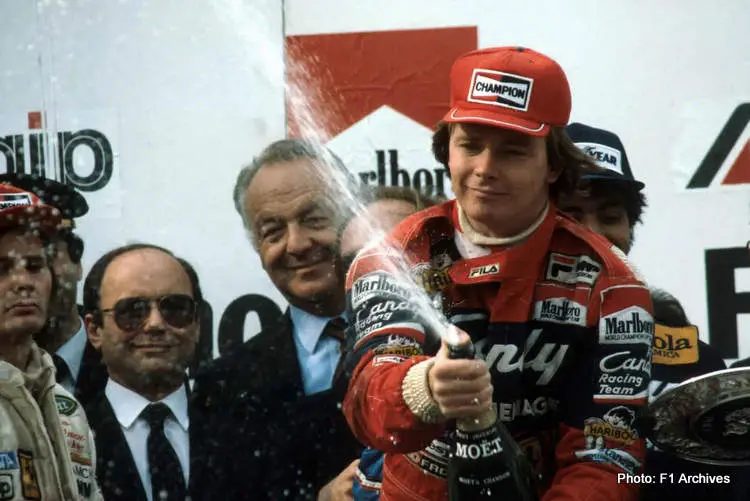
Didier Pironi’s name will forever be linked to the 1982 San Marino Grand Prix. He was accused of betrayal at Imola. According to the late John Hogan, Marlboro’s long-time marketing man, the vitriol against Pironi was fuelled by the media.
It was an incredibly sad season. Zolder. Montreal. Hockenheimring. Like most competitive drivers, there was more to Pironi’s career than one race. This is the story of a determined young man who was fully focused on becoming his country's first Formula 1 World Champion. He was almost there when dreams and his legs were shattered in a horrifying crash in Germany.
Early Days

Pironi grew up in Boissy-Saint-Léger, near Paris. His father ran a successful construction business, Sud Est Travaux. He won the Winfield Racing School Volant Elf Competition, which awarded him a fully funded season in Formula Renault for 1973.
In 1974, he won the Formula Renault championship and followed this two years later with the Super Renault championship.
Pironi took third place in the 1977 European Formula 2 championship. His Renault teammate René Arnoux took the title, and Eddie Cheever was second driving for Ron Dennis’ Project 4 Racing. Pironi’s only victory of the season came in the penultimate round from pole position at Estoril, Portugal.
He made a big splash and impression on watching team principals by winning the prestigious Monaco Formula 3 race.
Life in the Fast Lane

Ken Tyrrell’s team was a favourite starting point for young, talented French drivers thanks to financial support from the Elf oil company, now part of Total Energie. Pironi made it to the big league in 1978 and started from the final row in Buenos Aires on his F1 debut. He finished 14th in the race a lap down. His teammate and fellow Frenchman Patrick Depailler was the third man on the podium.
Pironi picked up his first championship point in Round 2, the Brazilian Grand Prix, where he finished sixth. He would again finish sixth in the next race at Kyalami. A pair of fifth-place finishes, Monaco, where Depailler took his maiden win, and Germany was his best showing of the season. However, six DNFs in sixteen races left him 15th in the championship with seven points.
Highlight of the season was victory at Le Mans with Jean-Pierre Jaussaud in a Renault-Alpine.
Staying with “Uncle Ken” for the 1979 season, Pironi made his first podium appearance at Zolder. The Belgian track would play an important part in his life. He signed off the ‘79 season on a high note with his second podium at Watkins Glen, another third-place finish. Five DNFs and disqualification from the US Grand Prix West in Long Beach placed him joint tenth in the championship with his teammate Jean-Pierre Jarier.
French Flair & First Success

For the 1980 season, Pironi joined forces with ex-Rugby player and racing driver Guy Ligier and his French Blue racing team, with the beautiful Gitanes logo adorning the car. The season started with a DNF in Argentina. The first podium for the all-French combo came in the third race, the South African Grand Prix at Kyalami.
Their day of days came in Round 5, the Belgian Grand Prix at Zolder, where Pironi stood on the top step of the podium for the first time in Formula 1. His margin of victory over the second-place Williams of Alan Jones was a whopping 47. The Australian had started the race from pole position, with Pironi second on the grid.
There were three other podium finishes: second in his home grand prix at Paul Ricard and third in the final two races of the season in North America, Montreal and Watkins Glen. Pironi was fifth in the championship.
Call from Commendatore

His impressive race-winning 1980 season put Pironi on a winning horse for the 1981 season. The possibility of achieving a lifelong dream and desire to become the first French world champion was strong. His teammate would be a driver who Enzo treated like his own son and who was also French-speaking. What could go wrong?
While Gilles Villeneuve won back-to-back races in Monaco and Spain at Jarama and scored 25 points to finish seventh in the championship, Pironi had a maiden season at Maranello to forget. He failed to finish in the first three races, and there were four other DNFs. He did not appear on the podium throughout the season, and fourth in Monaco was his best finish. The nine points he scored put him 13th in the championship.
If the 1981 Ferrari was a dog, the beautiful 1982 Harvey Postlethwaite-designed 126C2 was a serious turbo-powered racing horse. Renault, which pioneered turbo power in Formula 1, had a fast car but was more likely to breakdown than take the chequered flag.
The coast was clear for a Ferrari driver to sail to his and his nation’s first world champion.
Scuderia Ferrari scored only one point from the first three races of the 1982 season. Pironi’s sixth-place finish in Brazil came only after race winner Nelson Piquet and runner-up Keke Rosberg were disqualified.
Then came Imola

Arnoux and Prost started from the front row. No surprise. Arnoux led, but both Renaults retired. Again, no surprise. This put two second-row starters at the front, Villeneuve ahead of Pironi. The first lead change between the Ferrari drivers came when Villeneuve briefly went off the track and Pironi grabbed the lead.
The two exchanged leads many times during the race, with Villeneuve ahead going into the final lap. Pironi stunned him with a pass just after the Tamburello corner and went on to take his first Ferrari win. This left Villeneuve fuming, and he vowed never to speak with his teammate again.
A few days after the race, the French-Canadian racer called his friend Alain Prost and complained bitterly about Pironi late into the night. It was this conversation that led Prost to decide not to get this emotional if ever faced with a similar situation. Ironically, that opportunity will raise its ugly head with his McLaren teammate some years later—at the same track!
The next race was the Belgian Grand Prix at Zolder. On Saturday, Villeneuve went out to better the time set by Pironi. Car # 27 would not complete the lap. It collided with the March of Jochen Mass, the same driver he had outqualified in a third McLaren on his F1 debut at Silverstone five years earlier, went airborne, and Villeneuve was ejected from the car with his seat, resulting in fatal neck and head injuries.
Pironi’s car was withdrawn from the Belgian Grand Prix
Sadly, more death and destruction awaited only three races from Zolder. In Montreal, Pironi dedicated his pole position to Gilles, then stalled his Ferrari at the start. Most of the drivers were able to see and avoid the stranded car, but young Italian Riccardo Paletti, in only his second Grand Prix, crashed into the back of Pironi’s car. The car caught fire, but his injuries proved fatal.
“The show must go on” in motor racing. And so it did. The next three races firmly put Pironi as the favourite to win the Drivers’ Championship. He won the next round at Zandvoort and was second at Silverstone. In his home grand prix at Paul Ricard, the top four finishers were all home-grown talent. Arnoux, against team orders, took victory over Prost.
In a 2009 interview with F1Weekly podcast, Arnoux justified his victory, saying, “I had the same contract as Prost, so I won my home race and said bye, bye to Prost.”
Pironi was third, and his new teammate Patrick Tambay was fourth. The next race was the German Grand Prix. High-speed action in the rain at Hockenheim can lead to grave consequences. On Saturday, out to try new Goodyear wet tires, Pironi’s Ferrari was launched extremely high in the air after running into the back of Prost’s Renault.
His image of the accident is seeing a Ferrari moving vertically high above his car. Serious leg and other injuries cut short a great racing career. The man he crashed into would go on to become their nation’s first world champion.
It was a highly charged and emotional weekend for the Ferrari team as car #27 took victory with Tambay at the wheel.
The Need for Speed

Pironi’s recovery was slow; after several surgeries and months of rehab, he was able to walk again. The desire for racing was still burning, but after a test session in a Ligier at Dijon-Prenois, the dream was over. At least on four wheels.
Pironi then turned his attention and energy to powerboat racing in his Colibri. In early August 1987, he won the Norwegian round of the World Offshore Powerboat Championship. On August 23, tragedy struck for the final time. Colibri and its crew were competing off the coast of Isle of Wight.
In pursuit of the race-leading boat at high speed, they encountered a wave from a passing oil tanker that flipped over, and all three crew members including Didier Pironi were killed instantly.
Pironi’s girlfriend, Catherine Goux, was pregnant at the time of his death. When her twin boys were born, she named them Gilles and Didier. Gilles Pironi also reached Formula 1 as an engineer with Mercedes. When Lewis Hamilton won the 2020 British Grand Prix, Gilles was on the podium to receive the constructors’ trophy.
Pironi, like father, like son the winning beat goes on.

Latest News
Loading