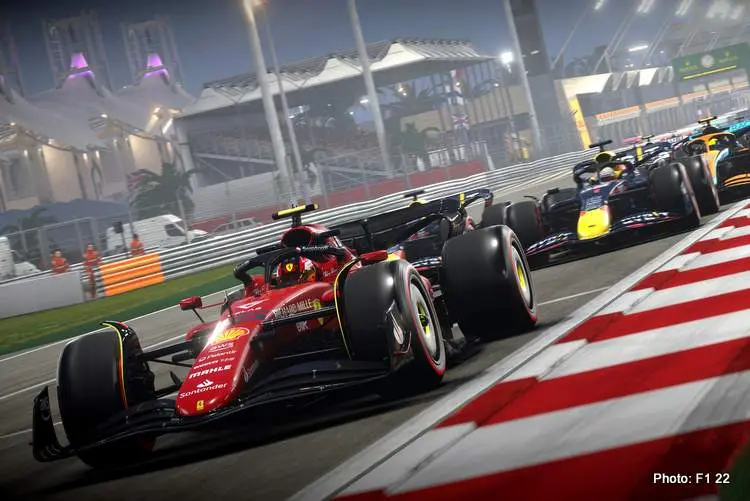
If you’re on the outside looking in, you might be surprised that Formula 1 and other types of motorsports games are a considerable distance behind the top eSports leagues.
Fortnite, League Of Legends, Counter-Strike, and Dota 2 are so far ahead of any motorsport eSport that it isn’t even close.
However, given that there are so many different accessories for professional video gamers who enjoy motorsports games, it’d be easy to conclude that it is one of the most popular. Still, it pails compared to first-person shooter games and online battle arena games, and it’s not until you scratch beneath the surface that you begin to understand why.
What’s Behind The Popularity Of Top eSports?

There’s not a set answer to this question, and given that many of the games have risen to the top of professional video gaming over a decade and a half, multiple extenuating factors have allowed them to flourish.
Games like Dota 2 generate prize pools in the tens of millions of dollars, and one of the most prominent driving factors behind the success is a generation of gamers who have developed a strong affinity to the game and the colossal prizes that are on offer. The design of Dota 2, Fortnite, and other top eSports games and tournaments like League of Legends all have this in common.
Not only have they been able to rocket to the top of professional video gaming, but they have millions of fans worldwide who are glued to the brand as much as they are to the game.
These aren’t the only components to consider, though. One element that often goes overlooked is how well-designed the tournaments are.
Dota 2 has some of the highest prize pools ever, which generates a lot more interest and causes more gamers to try their hand at that game, specifically given the prizes on offer. Valve is the brains behind two of the biggest games in eSports, Counter-Strike and Valorant, and they have curated these competitions themselves.
By doing this, they’ve been able to appeal to the fanbase and put their money behind the tournaments, adding an entirely new dimension, like a bespoke tournament. It is this ingenuity that has set these tournaments light years ahead of most of their competition.
It’s not just motorsports games that have been left in their wake, but there are no sports games, including globally successful titles like NFL Madden and FIFA, that can hold a candle to the popularity of the top titles.
The Struggle Of Motorsports eSports

The EA Sports Formula 1 game is the best-selling in its genre. Additional accessories people use, including custom wheels, headsets, and specialist gaming chairs, also sell well, raising further questions about why racing games are so far behind.
With the phenomenal and seemingly unstoppable Max Verstappen continuing his quest to become the greatest driver of all time and grabbing global news, the popularity of F1 is hardly dwindling.
Few would argue that he’s not on his way to at least matching some of the all-time greats, and although he, his team, and the sport remain as popular as ever, why is this popularity not transpiring into globally successful professional video gaming tournaments?
A few components highlight the plight of motorsports games, and it isn’t easy to try and rival the eSports that sell out stadiums and arenas worldwide. Firstly, the main issue is that motorsports games are a solo venture.
Games like League Of Legends and Dota 2 are just as good in a team game format as they are on your own. However, by appealing to a more significant demographic and scope of people, this allows more gamers to be able to play together; it adds a social element that simply doesn’t exist for F1 games.
Sure, you can speak to your friends as you play, but team games rule the roost in eSports, and it doesn’t get much more solo than F1 or motorsports, which is a significant part of the issue.
Secondly, the game just isn’t popular enough to bring in the millions of viewers we see for League Of Legends or Dota 2. Yes, it often shifts over a million copies annually and is profitable for EA Sports, but League of Legends has around 8 million players daily; the gulf is enormous.
Conclusion

For motorsports to begin to challenge these iconic eSports games, they’ll need to think outside the box, whether they bring in versions that can incorporate a team model, incentivize tournaments, or bring out new features within the games that could tailor it to fit into a competitive eSports mold.
Unless F1 games can mirror the actual popularity of the sport worldwide, which brings in some of the world’s biggest celebrities and crowds, then it will continue to play a background role in the world of professional video gaming.
Until this gap is shortened considerably, there’s no viable way for motorsports games to challenge the top eSports titles.
Latest News





Loading