After Sunday's Spanish Grand Prix Max Verstappen that he "was a sitting duck”, while Lewis Hamilton said he saw something in Max’s driving style that was different to what he had noticed before while riding behind the Dutchman.
From a careful analysis, we have been able to pinpoint what that was, and how Hamilton was able to conquer the Red Bull in the end.
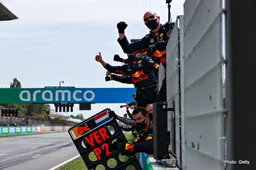
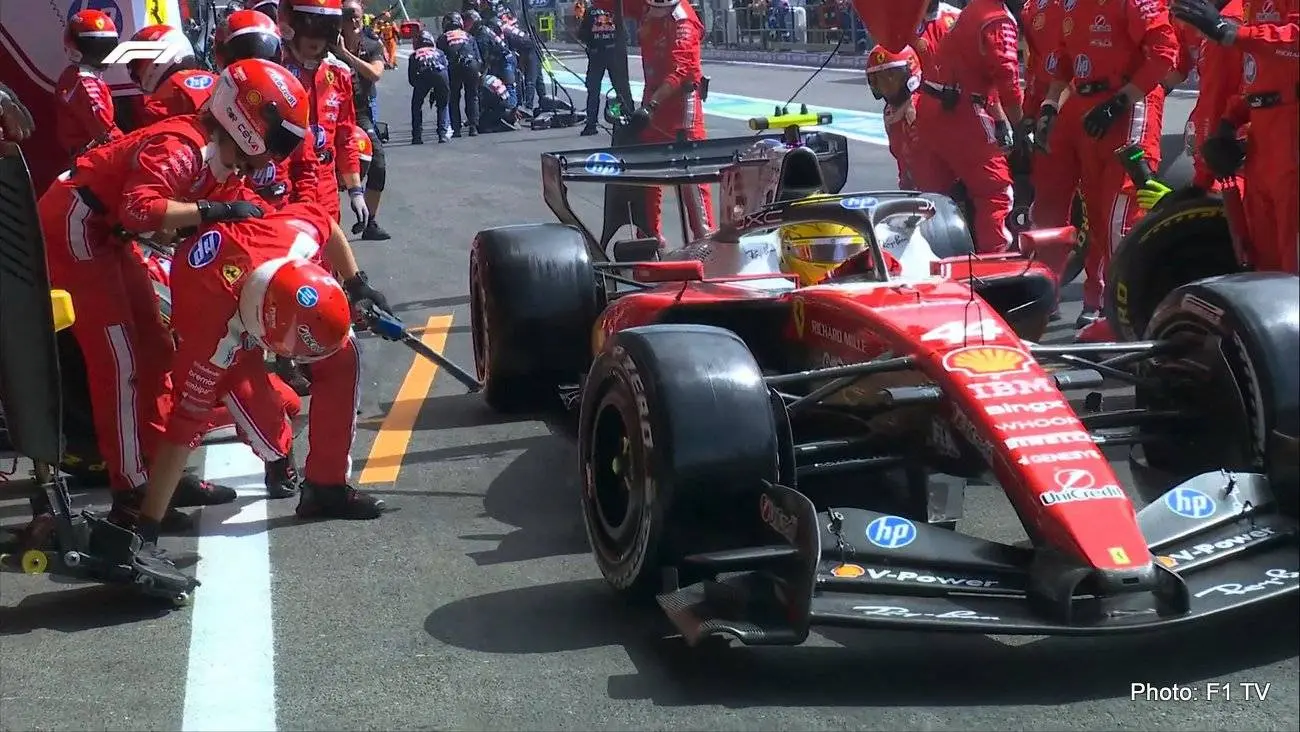
As most casual observers would have seen, at the first stop for tyres, the Red Bull crew were uncharacteristically slow.
That extra two seconds was probably enough for Hamilton to have regained the lead if he had pitted on the next lap, but he didn’t. Coming out more than seconds behind Verstappen when he did pit for tyres, Mercedes had to make a decision.
With Lewis making up the five-second gap in only a few laps, it was clear that the Mercedes had pace over the Red Bull. But at every lap thereafter, Hamilton could not gain enough speed off the last turn to overtake Verstappen using DRS. How was he able to pull Hamilton off the corners so well? Let’s take a look at how this race played out.
Red Bull had only one set of fresh medium tyres for the race, while Mercedes had two sets for Hamilton. That meant that a two-stop strategy was in the cards for Hamilton, and a two stop for Verstappen would not have produced sufficient pace in the end to either stay ahead, or overtake the Mercedes given that they only had a set of softs for the second stop.
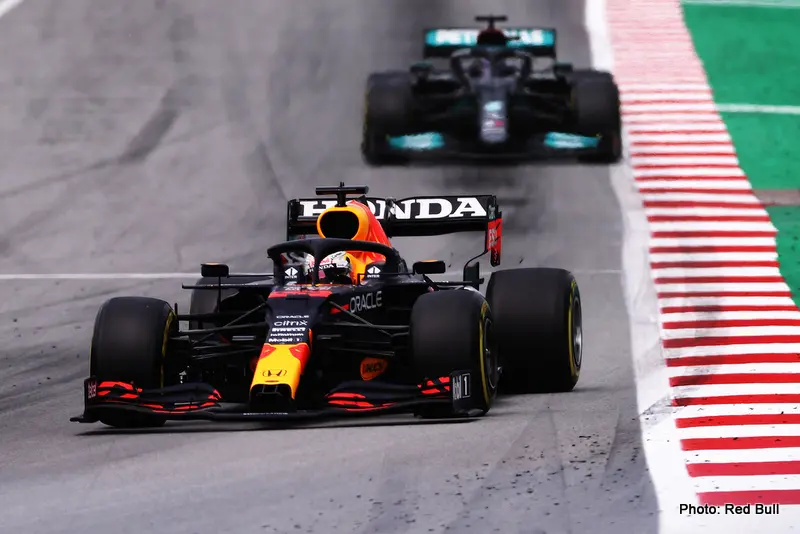
One thing I noticed throughout the race, and especially when Hamilton was running so close behind Verstappen after the first stop, was that the two had radically different driving styles. Going into the turns where there was a straight leading up to entry, Verstappen would enter a full car length deeper than Hamilton before turning.
He then turned quickly and aimed for a late apex before accelerating. He did this lap after lap, while Hamilton entered the “normal” way and was not able to straighten the car out as soon as Verstappen. This is what Hamilton had observed and talked about in his interview.

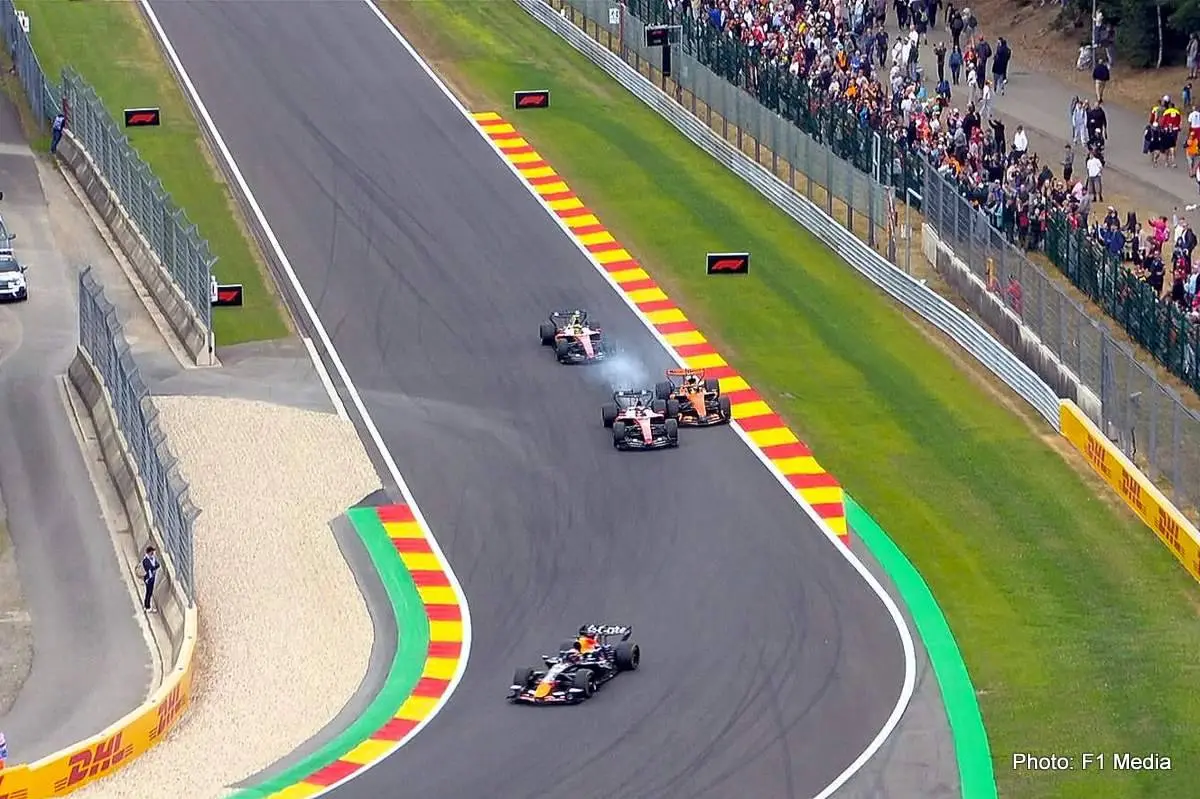
Here we see Verstappen corner entry with the front tyres coming off the white stripe only four red stripes from the end.

Whereas Verstappen was four stripes back from the end on his entry, Hamilton is a full eight stripes back, or a car length earlier on his entry turning off the white stripe. This difference in entry caused a much different exit that allowed Verstappen to stay ahead of the Mercedes, at least for a while.
The advantage Verstappen had with this style was that with a late apex, he could apply power not only sooner, but with more force. It was visually evident that exiting those turns produced a gap that was odd for two Formula 1 cars whose overall performance was very close.
With fresher tyres, Verstappen could maintain a greater distance to Hamilton while entering the DRS zone that was difficult to close for Hamilton. Even in qualifying, this style may well produce quick lap times where the race pace difference we observed showed the Mercedes at an advantage.
The consequences of Verstappen's driving style is that the late apex and harder acceleration causes the rear tyres to degrade more quickly. In contrast, Hamilton's softer entry and exit is very easy on the tyres, especially at a track like Circuit De Barcelona-Catalunya that is known to be very abrasive.
We have seen in past races where Red Bull had a similar strategy to the one Mercedes used in this race where they pitted later for fresh tyres, ran Hamilton down, but could not complete the pass at the end. Could Verstappen have used up his rear tyres then with his unique driving style?
Did Mercedes engineers and strategist know something about how Verstappen's driving style would cause eventual degradation of the rear tyres and thus allow Hamilton a relatively easy pass late in the race? We can only guess what they knew then, but are pretty sure of what they know now.
Bob Bolles is a professional race engineer and author with over 20 years of experience writing technical articles and books. His unique technical perspective comes from working closely with many hundreds of race teams in a wide range of classes and series throughout his career.
Latest News
Loading