Blockchain Behind the Wheel: Streamlining Motorsport Operations
F1 NewsTuesday, 02 April 2024 at 13:57
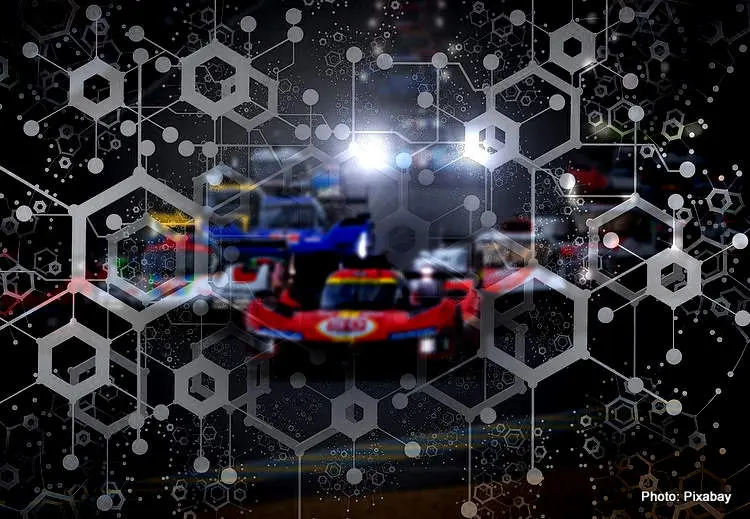
Imagine a racing world where every detail, from logistics to vehicle maintenance, operates with flawless precision. Blockchain technology is setting the stage for such a revolution in motorsport.
This special report for our Formula 1 readers and F1 fans, explores how blockchain can streamline operations, enhance vehicle maintenance, manage races, and overhaul financial transactions, promising a new era of efficiency and transparency.
So, if you are looking for a website that connects you to investment education firms that can help you along your investment journey, consider visiting astral-edge.com/.
Enhancing Team Operations and Logistics through Blockchain
Imagine a race team where every piece of data, from fuel consumption to tire wear, is securely logged in real time. Blockchain technology makes this possible. By storing data on a decentralized network, teams can access accurate and tamper-proof records instantly. This can lead to quicker decisions about vehicle adjustments and strategy.
Think about the ways that logistics can be improved. Currently, intricate logistics procedures are involved in keeping track of the many parts and equipment needed for every race. Everything may be digitally logged and tracked with blockchain technology. This guarantees that the appropriate part is available when needed and lowers the possibility of mistakes and losses.
Ever consider the amount of time and money that could be saved by doing that? Additionally, blockchain enables more effective and transparent communication between all of the race's stakeholders. Everyone might have access to the same real-time data, from logistics managers to engineers, which would increase team coordination and reduce communication lag. Does that sound like a way to alter the course of play? Absolutely.
Lastly, this technology also helps in managing travel schedules and accommodations more efficiently, crucial for teams that compete globally. Imagine blockchain-enabled smart contracts automatically handling bookings and transport logistics based on pre-set criteria. This could significantly reduce the administrative burden on team members, allowing them to focus on the race.
Utilizing Distributed Ledger Technology to Transform Vehicle Maintenance
The foundation of blockchain technology, distributed ledger technology (DLT), has the potential to completely change how racing teams maintain their cars. DLT can assist in preserving the integrity and performance of a vehicle over time by producing an unchangeable record of every component and process.
For example, the information about each time an automobile is serviced may be recorded on a blockchain. This covers the actions taken, who carried them out, and when. This results in an extensive, unchangeable history that is crucial for guaranteeing the car performs at its best. It also aids in problem solving, since a mechanic can swiftly go over comprehensive histories to comprehend previous problems.
Imagine a scenario where a critical part is due for replacement. Using blockchain, the team can ensure the part's authenticity and its history. Counterfeit parts are a real concern in motorsports, and blockchain provides a way to verify genuine components, enhancing both safety and performance.
Furthermore, this technology can help streamline regulatory compliance by providing clear records for inspection. Regulators could access maintenance logs to verify that a vehicle meets safety standards without wading through piles of paperwork. How much quicker and easier could inspections be with such a system in place?
Blockchain in Race Management and Coordination
Blockchain could significantly enhance race management and coordination by introducing more structured and secure processes. Through the use of smart contracts, tasks like registration, qualification, and compliance can be automated, reducing human error and increasing efficiency.
For example, smart contracts could automatically verify if a team has met all the regulatory and competition requirements before a race. This removes the manual checking process, which is often slow and prone to errors. Also, during the race, blockchain can provide real-time data to all parties, improving the coordination of race logistics like pit stops and driver changes.
Imagine a race where every aspect, from start to finish, is seamlessly integrated and automatically adjusted based on real-time conditions. The potential for blockchain to reduce delays and improve fairness is significant.
Financial Transactions and Sponsorship Deals
In the world of motorsport, financial transactions and sponsorships can be complex and opaque. Blockchain offers a way to simplify these processes and make them more transparent. For example, smart contracts can automate payments based on performance or milestones without manual invoicing and checks.
Imagine a sponsorship deal where payments are triggered by automatic data verification—like broadcast times, logo visibility, or race placements. This would not only speed up transactions but also build trust between teams and sponsors.
Furthermore, blockchain may be able to facilitate more transparent income sharing management amongst organizers, teams, and other stakeholders. Real-time financial data would be available to all parties, minimizing disputes and guaranteeing that everyone gets their fair share.
Conclusion
In conclusion, blockchain technology has the potential to revolutionize motorsport by increasing operational efficiency and transparency beyond anything that has been seen previously.
The motorsport sector may reach previously unheard-of levels of accuracy and integrity by embracing this cutting-edge technology, opening the door for a day when speed and technology will naturally merge in the future.
Latest News


Loading