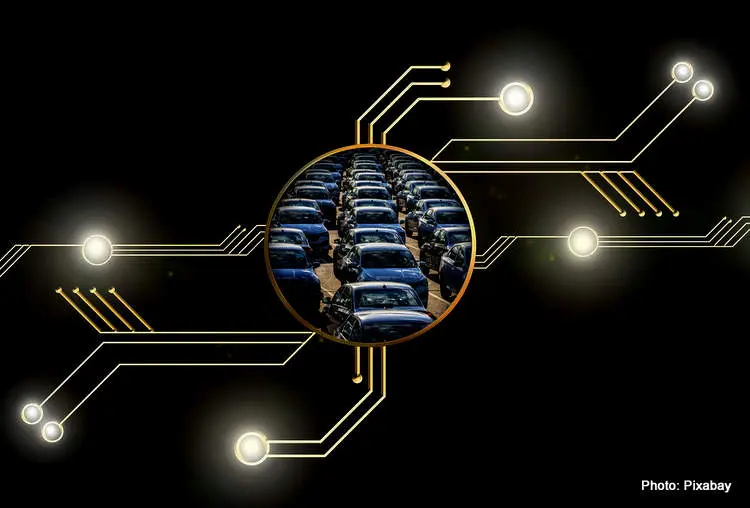
The automotive industry, a behemoth of complex machinery and meticulous production lines, often struggles with an invisible foe: a tangled and opaque supply chain.
This post is for our Formula 1 readers and F1 fans who are interested in information about the Automotive Industry and Crypto Supply Chain: Gearing Up for a Blockchain Revolution. From securing ethical sourcing of raw materials to battling counterfeit parts and streamlining logistics, challenges abound.
But on the horizon emerges a technology poised to disrupt and transform – cryptocurrency and blockchain. In this landscape, innovative solutions such as those offered by Yuan Pay Group can play a pivotal role in enhancing transparency and traceability throughout the automotive supply chain.
Imagine a system where every bolt, screw, and sheet of metal has its own secure digital identity, its journey from mine to assembly line meticulously tracked on a tamper-proof ledger. This is the promise of blockchain, a decentralized database that revolutionizes transparency and trust in the automotive supply chain such as License Plate Inserts.
Immutability is what makes blockchain revolutionary for the automotive industry
At its core, blockchain is a digital record of transactions, shared across a network of computers. Each new entry, or "block," is linked to the one before it, creating an unbreakable chain. This immutability is what makes it revolutionary for the automotive industry:
- Traceability: No more blurry lines. Blockchain empowers us to track every component, from ethically sourced minerals in batteries to the origin of that shiny paint coating, ensuring transparency and responsible sourcing. Imagine identifying counterfeit parts before they even enter the system, saving lives and protecting brand reputations.
- Efficiency: Paperwork mountains and communication delays become relics of the past. Smart contracts, self-executing agreements on the blockchain, can automate tasks like payments and approvals, streamlining workflows and optimizing inventory management. Think of parts arriving just in time, production lines buzzing without hiccups, and costs plummeting.
- Security: Cyberattacks on sensitive supply chain data become a thing of the past. Blockchain's robust cryptography makes it incredibly secure, shielding information from tampering and fraud. Imagine vehicles immune to data breaches, protecting vital information like warranty records and maintenance history.
- Trust: In an industry rife with unknowns, blockchain fosters trust between stakeholders. Every step in the chain is transparently recorded, creating a single source of truth that all parties can access. Imagine building relationships based on mutual trust, where suppliers and manufacturers collaborate seamlessly.
These benefits are not mere theoretical possibilities
Companies like BMW are already utilizing blockchain to track cobalt, a key battery component, ensuring responsible sourcing and avoiding conflict minerals. Ford is piloting a program to track parts using radio-frequency identification tags and blockchain integration, aiming for real-time visibility and improved efficiency.
But the journey isn't without its bumps. Scalability remains a challenge, with transaction speeds on some blockchain networks needing significant improvement to handle the sheer volume of data involved in a global automotive supply chain. Regulation is also evolving, with governments and industry bodies still grappling with the implications of this game-changing technology.
Yet, the future appears bright. Collaboration is key, with initiatives like the Mobility Open Blockchain Initiative (MOBI) bringing together automakers, tech giants, and startups to develop common standards and accelerate adoption. As the technology matures and regulatory frameworks adapt, we can expect even more innovative applications:
- Micropayments for vehicle data: Imagine cars earning tiny bits of cryptocurrency for sharing real-time traffic or road condition data, creating a decentralized network of sensors and contributing to safer, smarter transportation.
- Decentralized marketplaces: Peer-to-peer platforms powered by blockchain could revolutionize used car sales, eliminating intermediaries and increasing transparency for both buyers and sellers.
- Tokenized ownership models: Vehicles could be fractionalized and represented as tokens, allowing for shared ownership and democratizing access to the world of high-performance automobiles.
The automotive industry, long known for its pioneering spirit, is now at the cusp of a crypto-powered transformation. By embracing blockchain and its transformative potential, we can pave the way for a more efficient, transparent, and sustainable future of mobility. So buckle up, the road ahead promises to be exhilarating!
Latest News





Loading