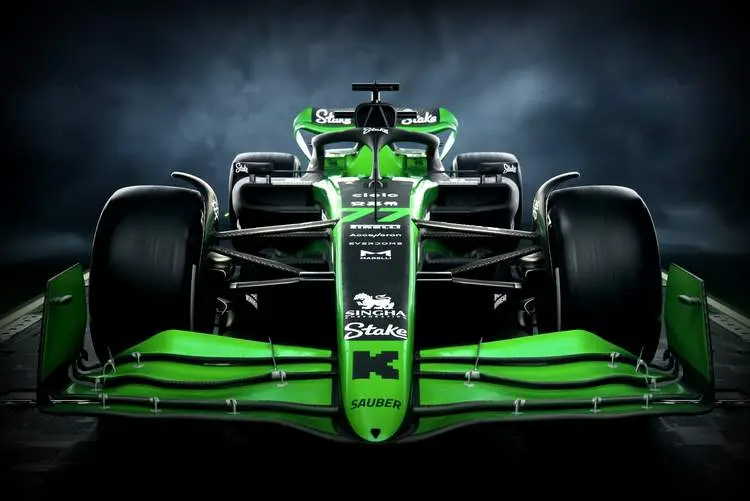
The number of online betting companies sponsoring Formula 1 teams has dramatically increased in recent years, with Sauber’s Stake being the most conspicuous.
Parc Ferme asks: Is the betting and gambling money train driving its regulatory agenda?
Gambling and betting organisations first attempted to promote their product through sports sponsorship back in the 1990s. At the time, the public resolutely rejected this, but attitudes started to shift in the early 2000s as bookmakers started to support football clubs.
Legislation on virtual gambling in 2018 then paved the way for direct sport sponsorship tie-ups. F1 fans, with their affluent skew and tech-savvy predisposition, made them a fat goose ready to be plucked.
Betting has always existed in motorsport, but remained predominantly within the community. Normally, it centred on who would win the world championship. Engaging with a wider audience was difficult when all you had was TV coverage and a limited number of races and time zones.
Liberty’s strategy to drive fan interaction online has created a space that is perfect for penetrating and generating betting revenue in the sport.
Red or Black?

However, the most significant barrier to getting fans to put their hand in their pockets and place a bet was F1’s predictability. The reliability of the cars and the cost of development meant that Teams and their drivers dominated for long periods of time, year on year, race after race.
This predictability left little to speculate on and consequently poor odds. To make Formula 1 a more exciting platform for gamblers required more volatility in the results and data points to place bets on.
F1 has been introducing the necessary volatility since 2021. The introduction of sprint races is an example of why FOM heavily supports this development. The sprint race creates a quandary for the teams, manufacturing the possibility for more volatility.
With less time to set up for the main race, it’s difficult for one to dominate both. Consequently, the smaller teams choose to win or perform well in the sprint. We can expect points for the sprint races to be increased, creating more random results. The rationale for this will no doubt be to make sprint races more relevant, which, to be fair, they would.
Changing the regulations regularly and significantly also helps to prevent or upend car and driver domination. When you combine all this with the cost cap and add more races, the opportunity for a ball to be dropped becomes more likely.
Manufactured entertainment

The proliferation of online data and the education of the fans are also designed to lead them to believe they have a chance of predicting winners or results. Only hardened gamblers repeatedly bet on things they don’t understand or are purely chance-based.
It’s challenging to find data on betting trends in Formula 1. But, an estimate since 2018 states a 15-25% year-on-year rate. One that is not anticipated to abate any time soon.
If you require further evidence on how invested F1 is in gambling, it joined the International Betting Integrity Association (IBIA) monitoring system, reassuring regulators that betting markets are being protected.
Parc Ferme is neither against Sprint Races as a format nor making a profit. However, there is a danger that the skill and knowledge required to win are being regulated out for the sake of the dollar.
Bernie Eccelstone understood the threat and effectively barred gambling sponsorship. So do some countries, like the Netherlands. Maybe that’s why they’re losing their Grand Prix?
Latest News




Loading