Opinion: The DNA of F1 is Being Diluted by the Desperate Chase for 'Content'
F1 OpinionWednesday, 14 January 2026 at 15:03

If you stand at the edge of the catch fencing at Monza or Silverstone during a quiet Friday practice session, you can still feel it.
That primal, vibrating thrum that travels
through the soles of your feet and hits you right in the chest. It’s the smell of
burnt rubber, the heat haze rising off the tarmac, and the sheer, unadulterated
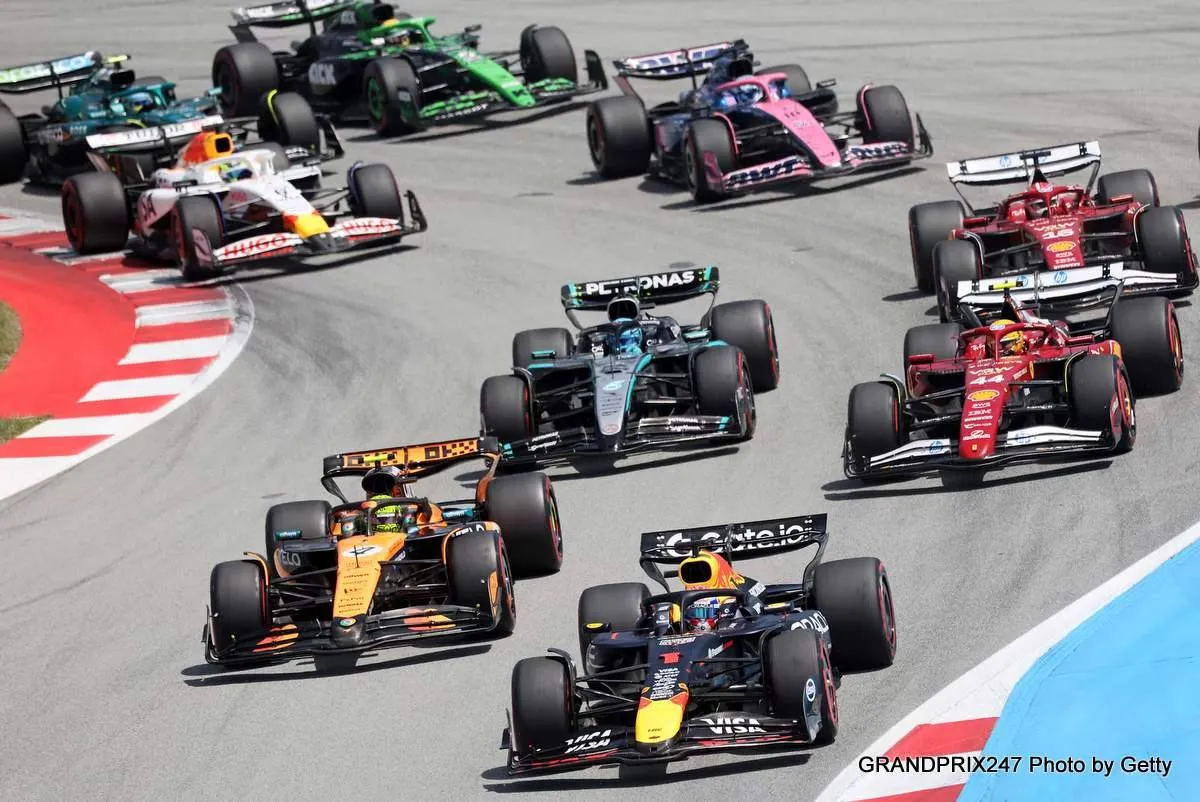
violence of a Formula 1 car changing direction at 180 mph.
For decades, this sensory
assault was enough. It was the product. We tuned in to watch engineering
geniuses and driving gods dance on the limit of physics. We didn't need
pyrotechnics, we didn't need celebrity grid walks involving people who thought
Lewis Hamilton played for LA Galaxy,
and we certainly didn't need fake marinas in landlocked parking lots.
But take a walk through the
paddock in this coming 2026
season, and you’ll notice
that the "sport" part of the business is increasingly fighting for
oxygen amidst the "entertainment" suffocation. Formula 1 has always
been a commercial beast - Bernie
Ecclestone made sure of that - but
under the current Liberty Media regime, the dial has been turned so far past
"Max" that it’s snapped off entirely.
The Content Contentment Trap

The catalyst, as we all know,
was Drive to Survive. It brought in a new legion of
fans, which is undeniably a good thing for the bank balances of the teams. But
it also shifted the narrative focus. The drama in the pit lane is now often
valued higher than the overtaking on the track.
We are seeing a trend where
every moment must be "viral." Drivers are no longer just athletes;
they are content creators. The sheer volume of media duties, TikTok challenges,
and marketing activations forced upon the grid is exhausting just to watch. You
can see it in the eyes of Max Verstappen during those interminable pre-race
shows in Las Vegas or Miami. He just wants to drive. The show requires him to
be a performing seal.
This obsession with "The
Show" is dangerous because it dilutes the very thing that makes F1
special: its exclusivity and its seriousness. When you turn a Grand Prix into a
three-day Coachella festival with some cars in the background, you lose the
gravitas. You stop being the pinnacle of motorsport and start being just
another stop on the global entertainment circus.
The Licensing Overload

This dilution is perhaps most
visible in the aggressive, almost manic, licensing strategy we’ve seen over the
last few years. The F1 logo is currently being slapped on anything that stays
still long enough.
We have official F1 perfumes
(smells like tyre deg and desperation?), F1 crypto-exchanges, and high-end
simulator lounges in every major capital city. The commercial team in London
seems determined to squeeze every single cent of equity out of the brand,
regardless of whether the partnership makes sense for the sport's heritage.
Take the casino
sector, for instance.
We’ve moved way beyond the serious racing simulators like the F1 console
series by EA Sports. We are now seeing the brand enter the casual gambling
space. You can now log onto platforms and play the official Formula 1 slots
game by Atlas V.
Don't get us wrong, it’s a slick piece of software.
It captures the visuals and the sounds of the hybrid era perfectly, and for a
casual punter, spinning the reels to see a frantic pit stop animation is good
fun. Based on casino reviews at casinosistersite.co.uk,
it’s a popular choice among players. But
there is something symbolically jarring about seeing the pinnacle of automotive
engineering reduced to a game of chance. It reinforces the idea that F1 is now
a "lifestyle brand" first and a racing series second. It’s about
leveraging the IP for engagement, rather than preserving the purity of the
competition.
When the logo of the sport is
as likely to be found on a slot machine or a £200 polyester hoodie as it is on
a piece of carbon fibre, you have to ask: are we cheapening the mystique?
The Calendar Saturation

Then there’s the issue of the calendar. We are
currently staring down the barrel of a 24 or 25-race season as the new norm.
It’s unsustainably brutal.
We talk a lot about the cost
cap saving teams money, but the human cost of hauling a paddock across five
continents in nine months is astronomical. Mechanics are burnt out. Engineers
are divorcing. The sheer logistics of the modern F1 season are a triumph of
management, but a failure of empathy.
Furthermore, the saturation
kills the anticipation. In the old days, a Grand Prix was an event. It happened
every two weeks, and you spent the fortnight in between dissecting the data,
reading the rumours, and building the hype. Now? It’s a triple-header. By the
time the chequered flag falls in Mexico, we’re already worrying about freight
for Brazil next week. The narrative doesn't have time to breathe. We are
force-feeding the audience so much racing that they’re starting to feel
bloated.
The Tracks: Street Fight or Street Walker?

Finally, let’s look at where
we are racing. The shift away from purpose-built circuits like Sepang,
Hockenheim, or (heaven forbid we lose it) Spa-Francorchamps, towards street
circuits, is a commercial decision masquerading as a sporting one.
Street tracks look great on
Instagram. They have city skylines, they have VIP balconies, and they have
influencers. But do they produce great racing? Rarely. With the current size of
these hybrid monsters - which
are essentially the size of a Ford F-150 - tight street tracks usually result in
DRS trains and processionals. We know this from Monaco,
so why more street races are being added is beyond us.
We are trading the bravery of
Eau Rouge for the glitz of the Las Vegas Strip. We are trading gravel traps
that punish mistakes for car parks painted with sponsor logos. It’s a sterilisation of the sport.
The Future
Look, nobody wants F1 to go
back to the days where teams were folding every week and nobody watched on TV.
The financial health of the sport is robust, and that is to be applauded.
But there is a soul to
Formula 1 that feels like it’s being eroded, one "activation" at a
time. We are in danger of becoming NASCAR with better catering.
As we head into the next
regulation cycle, the powers that be need to remember one thing: The spectacle
shouldn't be the concerts, the slot games, or the celebrities on the grid. The
spectacle should be the best drivers in the world, in the fastest cars on
earth, trying to beat each
other into Turn One. Everything
else is just noise. And right now, the noise is getting too loud.
Latest News
Loading

