Where was motor racing first held and how did it evolve?
F1 HistoryMonday, 22 September 2025 at 06:09
When people hear the roar of engines and smell burning rubber, it’s hard not to get excited. Motor racing or motorsport is now a global spectacle, but have you ever wondered how it all began?
The history of motorsports stretches back more than a century, starting with early competitions between daring drivers in primitive machines. From the first racecar to today’s advanced types of race cars, the journey has been full of innovation, drama, and unforgettable moments.
Let’s explore how the very first competitions appeared and how they eventually shaped modern motorsport.
The First Car Race in History
The earliest recognized motor competition took place in France in 1894. Organized by a Parisian newspaper, the event followed a route from Paris to Rouen, covering about 126 kilometers. While it wasn’t a contest in the modern sense, it functioned more as a reliability trial. The main goal was to prove which automobile could endure the distance and rough conditions of the road.
This unique gathering captured public imagination and revealed the promise of motorized transport. Unlike horse-drawn carriages, these vehicles offered speed, independence, and mechanical power. The Paris–Rouen run is often described as the true birth of auto racing. It paved the way for fierce competition among inventors, manufacturers, and the bold drivers eager to test their creations.
Racing and the World of Modern Entertainment

While auto racing captures fans with speed and precision, modern audiences often look for different kinds of excitement. Online platforms provide that outlet, with gaming hubs offering rewards and variety. For example, discussions about experiences such as Stay casino withdrawal show how people value smooth access to their winnings.
Just like drivers depend on reliable pit stops, players want quick, safe, and efficient systems. Both worlds — motorsport and gaming — reflect the same desire for fairness, trust, and unforgettable moments.
The Rise of City-to-City Races
After the Paris–Rouen trial, the French quickly embraced long-distance contests between major cities. Events such as the Paris to Bordeaux run in 1895 captured the imagination of the public. These early journeys were grueling, often stretching across hundreds of kilometers on rough, unpaved roads.
Drivers battled dust, mud, and frequent mechanical breakdowns at nearly every stage. Yet the sense of adventure and excitement was unmatched. Crowds gathered along roadsides, eager to see these noisy machines speed through villages and open countryside.
City-to-city competitions highlighted the potential for stronger, faster, and more durable automobiles. Manufacturers soon realized that these events were powerful marketing tools. A single victory could demonstrate reliability and performance, instantly making a car more attractive to potential buyers.
The First Grand Epreuve

By 1906, motorsport needed more structure. France hosted the first official Grand Prix in Le Mans. Unlike city-to-city runs, this race took place on a closed circuit, looping around roads near the city.
The competition lasted two days, with drivers covering nearly 1,238 kilometers. Speeds averaged 100 km/h, which felt astonishing at the time. It was here that racing began resembling modern formats.
The Grand Prix marked a turning point in the history of motorsports. Organized rules, set circuits, and official timing created a blueprint still used today.
The Development of Race Cars
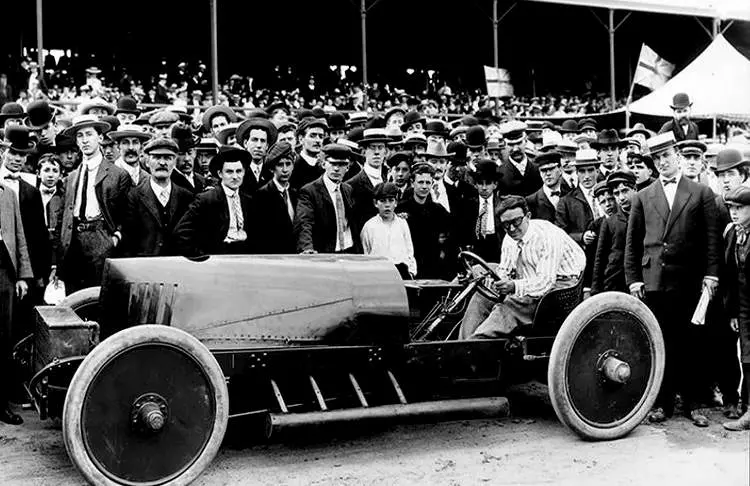
Early machines were far from sleek. The first racecar looked more like a motorized carriage than a modern vehicle. They lacked windshields, safety gear, and even proper tires.
Over time, technology changed everything:
- Engines grew more powerful, allowing higher speeds.
- Aerodynamics became essential, shaping bodies to cut through air.
- Brakes and tires improved for safety and control.
- Materials shifted from wood and steel to aluminum and carbon fiber.
These advances created different types of race cars, from nimble Formula vehicles to heavy endurance machines. Each design catered to specific famous races in history.
Famous Early Races That Shaped Motorsport

Some events stand out for their influence on racing culture:
- Mille Miglia (Italy, 1927): A thousand-mile endurance challenge across Italian roads.
- Indianapolis 500 (USA, 1911): Known for speed and strategy, it remains one of the famous races in history.
- 24 Hours of Le Mans (France, 1923): Testing durability, drivers, and machines over an entire day.
- Monaco Grand Prix (since 1929): Iconic for its narrow streets and glamorous backdrop.
These events shaped fan culture and inspired car makers to keep innovating.
Types of Race Cars Across Eras
The machines themselves evolved dramatically. Here are some key categories:
| Era / Type | Description | Notable Feature |
| Early Racecars | Modified carriages with engines | Basic, unreliable designs |
| Grand Prix Cars | Sleeker builds for closed circuits | Higher speeds, better control |
| Formula Cars | Open-wheel, single-seaters | Precision and aerodynamics |
| Touring Cars | Heavier, based on road vehicles | Endurance focus |
| Sports Prototypes | Custom endurance machines | Extreme speed and durability |
This variety shows how auto racing adapted to challenges and fan demands over time.
From Gentlemen Drivers to Professionals

In the early days, racing was for wealthy adventurers. Many were aristocrats or entrepreneurs fascinated by speed. But as competitions grew, so did professionalism.
By the 1920s, teams began hiring trained drivers. Specialized mechanics and pit crews supported them. This shift created true careers in car racing. No longer a hobby for the rich, it became a global sport.
The rise of professional drivers also gave fans heroes. Figures like Tazio Nuvolari and Rudolf Caracciola became legends of the track. Their daring exploits are still celebrated in the history of motorsports.
The Influence of Safety on Racing
In early years, safety was almost non-existent. Helmets were optional, and cars had no seat belts. Fatalities were common, both for drivers and spectators.
Gradually, organizers introduced safety standards. Barriers, helmets, fireproof suits, and medical teams became mandatory. Though accidents still occur, the sport is far safer today.
The focus on safety shaped types of race cars. Designs now protect drivers with roll cages, crash structures, and advanced restraints. Motorsport grew into a balance of danger and protection.
World War II and Motorsport

The outbreak of World War II halted most racing. Many manufacturers focused on building military vehicles. However, the post-war period brought a massive resurgence.
By the late 1940s, new championships emerged. Formula One was born in 1950, becoming the pinnacle of auto racing. NASCAR also appeared in the United States, focusing on oval tracks and stock cars.
War had accelerated technology, which carried over to motorsport. Stronger engines, lighter materials, and better designs set the stage for modern racing.
Famous Drivers in Early Racing History
Certain personalities defined the sport’s rise:
- Juan Manuel Fangio: Dominated the 1950s with five world championships.
- Tazio Nuvolari: Nicknamed “The Flying Mantuan,” admired for fearless driving.
- Jim Clark: A 1960s icon, known for precision and smoothness.
- J. Foyt: A versatile American champion across multiple car races.
These drivers showed the human side of the history of motorsports. Talent, bravery, and charisma turned them into legends.
The Expansion of Motorsport Worldwide

By the mid-20th century, competitive motorsport had spread across nearly every continent. Europe, America, and Asia each developed strong traditions, with distinctive events and unique driving styles.
In Europe, attention centered on Formula circuits and endurance challenges. The United States built its culture around NASCAR and the fast-growing world of drag competitions. Japan leaned heavily on motorcycles at first and later embraced Formula-style circuits as well.
This global spread transformed motorsport into a cultural phenomenon. Fans everywhere found something to follow, from famous races in history to small-scale local club events. The variety ensured that enthusiasts of every background could connect with the excitement of speed.
The Modern Motorsport Scene
Today, the sport is a mix of tradition and innovation. Formula One continues to push engineering limits. NASCAR and IndyCar thrill American audiences. Endurance events like Le Mans remain ultimate tests of durability.
Modern race cars feature hybrid engines, complex aerodynamics, and advanced safety systems. Yet, the heart of racing remains the same: speed, competition, and passion.
Even as technology advances, fans still feel the same excitement as those who watched the first racecar roar down dusty roads.
The history of motorsports is a journey from fragile machines to engineering marvels. From the Paris-Rouen run to Formula One circuits, racing has grown into a global spectacle.
Whether you admire early pioneers or today’s professional champions, the core remains the same: courage and competition. The first racecar may look ancient now, but it started a tradition that continues to inspire.
Auto racing has always been more than just a sport. It’s about human ambition, the will to innovate, and the joy of speed.
FAQs
What was the first car race ever held?
The Paris-Rouen event in 1894 is considered the first organized motor race.
How did the first racecar look compared to today’s?
It resembled a carriage with an engine, very basic and far less safe than modern designs.
What are the main types of race cars today?
They include Formula cars, touring cars, sports prototypes, and stock cars.
What are some famous races in history?
The Indianapolis 500, 24 Hours of Le Mans, Monaco Grand Prix, and Mille Miglia are iconic.
How has auto racing changed over time?
It evolved from risky experiments on open roads to highly professional, global championships with advanced technology.
Latest News
Loading