Pit Stop as a Bet on the Race: One Decision That Changes Everything
F1 HistoryThursday, 27 April 2023 at 01:29
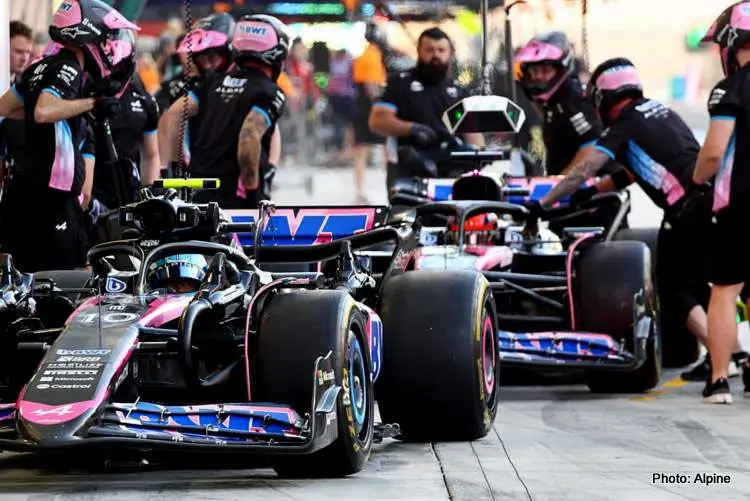
In Formula 1, races are rarely decided by outright speed alone. Over a full Grand Prix distance, performance tends to converge, margins shrink, and what separates winners from the rest is often something far less visible: the timing of a single decision.
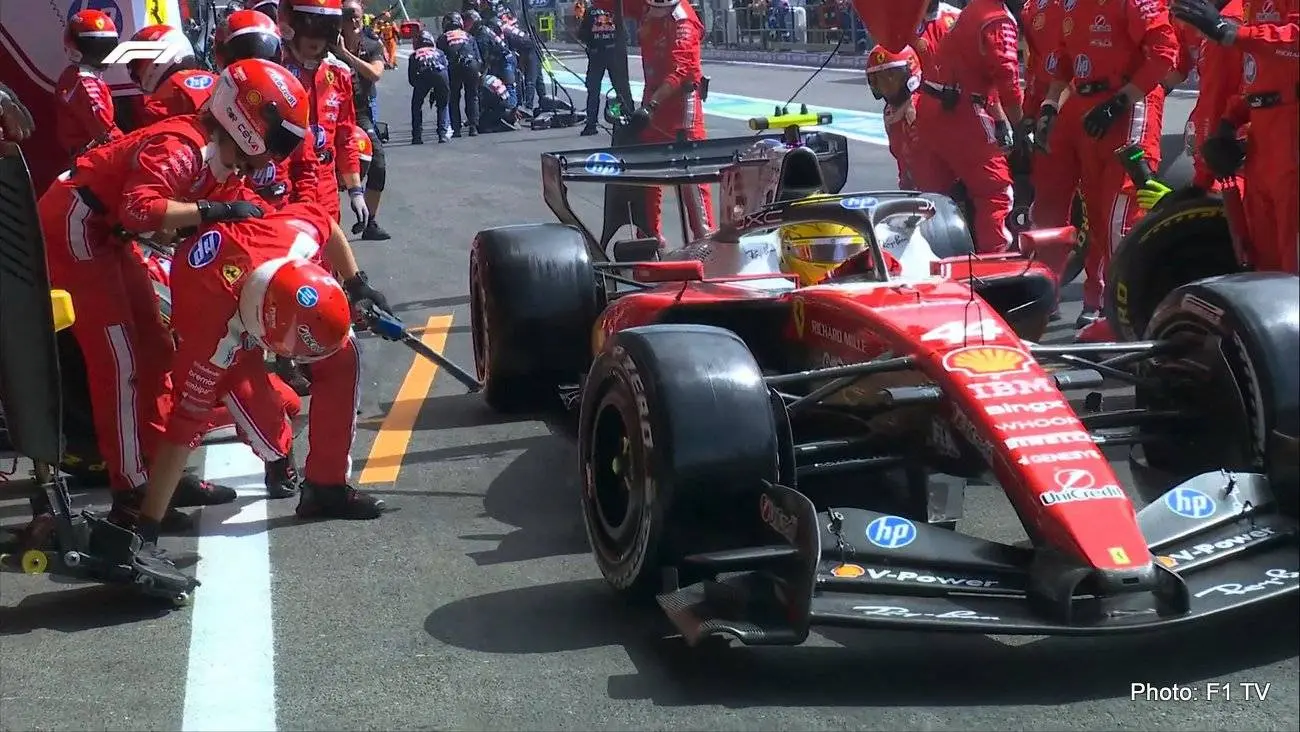
A pit stop, taken
at precisely the right moment, can overturn an entire race narrative. This is where Formula 1 begins to
resemble a structured game of probabilities rather than a pure test of pace.
Every lap feeds new data, every variable reshapes the field, and every decision
carries a measurable cost. In that sense, the pit wall operates less like a
garage and more like a control centre for calculated risk.
The Pit Window: Where Timing Becomes Strategy
A pit stop is not simply about changing
tyres. It is about identifying a narrow operational window where the trade-off
between track position and fresh performance delivers maximum advantage.
Stop too early, and a driver re-enters
into traffic, losing seconds behind slower cars. Stay out too long, and tyre
degradation erodes lap time to the point where competitors gain ground. The
optimal moment exists, but only briefly, and recognising it requires
interpreting incomplete information under pressure.
This decision is never made in isolation.
Teams must anticipate rivals, simulate multiple scenarios, and react to events
that cannot be fully predicted, such as a sudden Virtual Safety Car or a shift
in wind conditions affecting balance. The pit stop becomes a hinge point, where
probability and instinct intersect.
Undercut and Overcut: Competing Models of Advantage
Two fundamental strategic tools define
pit stop thinking: the undercut and the overcut.
The undercut relies on fresh tyres
delivering immediate pace, allowing a driver to gain position while a rival
remains on worn rubber. It is aggressive and time-sensitive, demanding clear
air and precise execution.
The overcut, by contrast, extends a stint
in the hope that consistent pace and clean track conditions outweigh the
benefits of fresh tyres. It is a slower, more patient play, often used when
traffic conditions favour staying out.
Both approaches reflect different
interpretations of the same data. Neither guarantees success. The choice
depends on track layout, tyre compounds, and how the race is unfolding in real
time. What appears logical on paper can unravel within a single lap.
Data Flow and Real-Time Judgement
Modern Formula 1 teams process vast
streams of telemetry: sector times, tyre wear curves, fuel loads, and
competitor gaps. Yet despite this volume of information, uncertainty remains
central.
Data informs decisions, but it does not
eliminate risk. Engineers must weigh probabilities rather than certainties. A
projected gain of two seconds may vanish if a backmarker fails to yield, or if
a driver struggles to bring tyres into the optimal temperature window.
This constant recalibration mirrors the
logic behind many digital systems where outcomes are shaped by evolving inputs
rather than fixed rules. The difference lies in visibility: in Formula 1, the
consequences unfold live, lap by lap, in front of millions.
Decision Architecture Beyond the Track
What makes the pit stop such a compelling
concept is how closely it aligns with structured decision-making in other
environments built on probability and user interaction. Platforms designed
around real-time engagement, behavioural analytics, and outcome distribution
operate on similar principles.
In well-designed digital systems, the
user is presented with moments that resemble a pit window: points where action,
timing, and context combine to shape the result. The interface must communicate
just enough information to guide a decision without overwhelming it. Latency,
responsiveness, and clarity all become critical factors.
This is where platforms like rock-star-casino.com
illustrate how decision architecture translates into user experience. A session
is not a static interaction but a sequence of evolving scenarios, each
influenced by volatility, payout mechanics, and probability distribution. The
system tracks behavioural patterns, adjusts pacing, and presents options that
align with the user’s trajectory. Just as a Formula 1 team interprets live
telemetry to decide when to call a driver in, a digital platform processes
real-time data to structure moments of choice. The result is not random chaos
but a controlled environment where outcomes emerge from a balance of
calculation, timing, and risk tolerance.
The Cost of Being Wrong
In Formula 1, the penalty for a mistimed
pit stop is immediate and visible. A driver drops positions, loses track
position, and may never recover. The margin for error is measured in seconds,
but the consequences extend across the entire race.
Crucially, teams do not aim to eliminate
risk. They aim to manage it. A conservative strategy may secure points but
rarely delivers victory. An aggressive call can backfire, yet it is often the
only route to gaining an edge.
This dynamic reflects a broader
principle: advantage rarely comes from certainty. It comes from making informed
decisions under uncertainty, accepting that not every outcome can be
controlled.
Translating Strategy into Experience
For audiences familiar with structured
gaming environments, the parallels are intuitive. Systems built around
probability, session flow, and user engagement rely on similar mechanics. The
difference is one of scale and visibility rather than underlying logic.
Brands operating within this space,
including Rockstar Casino, structure their platforms around clear feedback
loops, balanced volatility, and transparent reward mechanics. The aim is not to
replicate the unpredictability of a race but to channel it into a coherent
experience where each decision feels meaningful and grounded in system logic.
The connection to Formula 1 lies in the
shared emphasis on timing, calculation, and consequence. Both environments
reward awareness, adaptability, and the ability to interpret signals as they
emerge.
Where Races Are Really Won
By the chequered flag, the narrative of a
race often appears straightforward. A winner stands on the podium, margins are
recorded, and results are finalised. Yet beneath that simplicity lies a
sequence of decisions, each carrying weight.
The pit stop is not just a technical
procedure. It is a strategic commitment, a moment where a team defines its
approach to uncertainty. Done well, it transforms potential into outcome. Done
poorly, it erases even the strongest performance.
In that sense, Formula 1 is less about
speed in isolation and more about how speed is deployed within a framework of
decisions. The fastest car does not always win. The best-timed choice often
does.
Latest News
Loading