Juan Pablo Montoya arrived in Formula 1 as a superstar then Kimi Räikkönen sent him packing to NASCAR
F1 HistoryTuesday, 09 June 2026 at 07:30
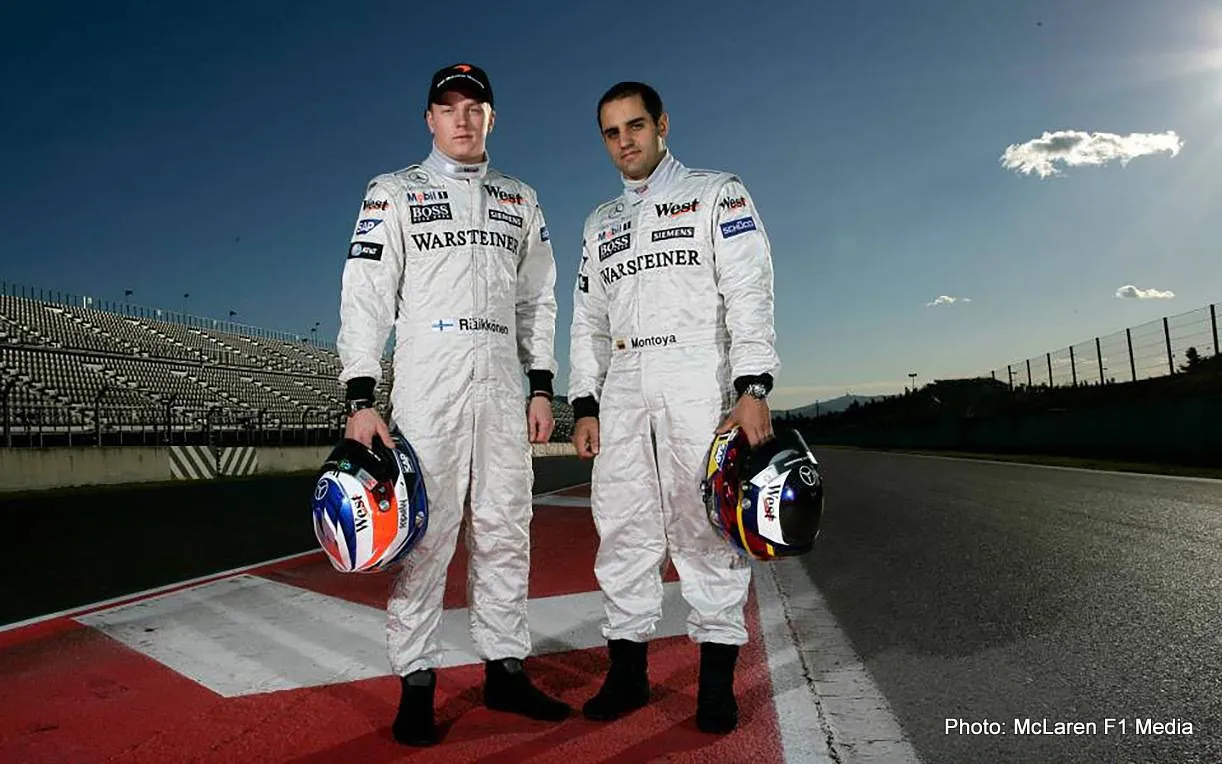
Kimi Räikkönen dominated Juan Pablo Montoya during their McLaren years, turning a hyped title tilt into a masterclass of brutal natural speed over raw aggression, which eventually sent the Colombian packing from Formula 1 to NASCAR.
Raikkonen, aka The Iceman, adapted seamlessly while the Colombian struggled with the car's demands, ultimately bailing for NASCAR in 2006 amid mounting frustrations. What many saw as a dream partnership quickly exposed deep clashes in style, culture and ambition.
In 2005, the potent Mercedes-poered McLaren MP4-20 often flew as the fastest car on track, especially later in the season. McLaren secured 10 wins to Renault's eight, yet reliability nightmares and early woes handed both titles to Fernando Alonso.
Räikkönen delivered seven victories, including breathtaking charges like his Japan masterclass from 17th on the grid, outscoring his teammate dramatically while fighting to the championship wire.
Montoya arrived with serious pedigree after bossing Ralf Schumacher at Williams, complete with poles, wins and a best of third overall in 2003. Expectations soared for the charismatic race-winner to challenge alongside Räikkönen in the Mercedes-powered machine. Instead, he managed just three wins – Britain, Italy and Brazil – while battling tyre warm-up issues and incidents that undermined his campaign.
A pre-season shoulder injury (playing tennis it was reported) further disrupted Montoya's adaptation to the McLaren way of going racing, sidelining him for key early races.
What went wrong?

The two driver's approaches could not have been more different. Montoya's ultra-aggressive steering inputs constantly upset the car's balance, forcing the team into bespoke suspension changes and geometry tweaks that complicated development.
They gradually softened his setup, even reversing certain adjustments late in the season to better unload the inside tyre. Räikkönen's smoother, more precise style simply clicked with the MP4-20, letting him extract maximum performance lap after lap.
Qualifying battles stayed relatively close at times, with Montoya snaring poles at Spa and Monza and converting one into victory. Yet overall, Räikkönen pulled clear when it mattered, delivering under pressure while his teammate dealt with retirements and inconsistency.
The switch to 2.4-litre V8 engines blunted McLaren's edge. The MP4-21 proved reliable but slower and more understeery, amplifying Montoya's challenges.
Räikkönen continued to outpace him consistently, finishing fifth with 65 points to Montoya's eighth and just 26. Early flashes like second in Monaco and third in San Marino faded as the car refused to suit his aggressive instincts.
Räikkönen's peak versus Montoya's redirection

The breaking point came at the United States Grand Prix in Indianapolis. First-lap contact with Räikkönen led to a multi-car shunt that also collected Jenson Button. Shortly after, Montoya announced his move to Chip Ganassi Racing in NASCAR for 2007 and was released immediately, with Pedro de la Rosa stepping in.
Ron Dennis addressed the exit with measured words: “With so many things happening in Juan Pablo's life right now, he should take some time out... to prepare professionally and personally.”
Montoya later reflected on feeling somewhat isolated at McLaren. He struggled with the car's handling traits, particularly understeer and tyre characteristics that never quite matched his previous machinery.
The structured, data-heavy environment under Dennis clashed with his instinctive, emotional approach, leaving him disillusioned with F1's heavy politics and intense focus on car development over pure driving talent.
The Colombian had been in talks with Ganassi for some time. Family discussions, including encouragement from his father, helped him commit.
“I don’t think about things. I make a decision and get on with it,” Montoya explained of his mindset. McLaren had already passed on their 2007 option, making the mutual split feel inevitable though abrupt to outsiders.
End of the F1 journey, NASCAR beckoned

The move allowed Montoya to rediscover joy in a friendlier NASCAR paddock with family-friendly surroundings in Miami. He enjoyed MODEST success there, including wins and strong IndyCar returns later, yet his F1 story ended at 94 starts and seven wins, sparking endless debate about what might have been had the fit been better.
Räikkönen went on to claim the 2007 Formula 1 title with Ferrari, cementing his status among the greats. His time at McLaren highlighted elite adaptability and quiet dominance in fast but fragile machinery. Montoya's raw speed and racecraft shone brightly at moments, but adaptation struggles and cultural mismatch proved too much.
This period stands as a classic driver-team mismatch study. Montoya joined as the star signing with CART and Indy 500 pedigree, full of flair and aggression. He departed as the clear number two who chose happiness and a fresh challenge over prolonged battles in F1's rigid structure.
Possibly possessing raw talent in Formula 1 like few, Raikkonen's comprehensive edge over their time sharing the McLaren garage remains a powerful reminder of how critical team and car fit can be at the highest level.
Very popular with fans during his time Formula 1, Montoya remains an elite driver, an IndyCar champion, a double Indy 500 winner and a seven-time Grand Prix winner. Including the winner of the 2003 Monaco Grand Prix, meaning he has a shot at the elusive Triple Crown of Motorsport should he manage an outright victory at Le Mans.
For now we are treated to straight-talking Monty's 'pearls of wisdom' as part of the F1 TV commentary team.
![What is Juan Pablo Montoya smoking? "The [Formula 1] show itself is pretty amazing in my opinion. I like it."](https://r.testifier.nl/Acbs8526SDKI/resizing_type:fill/width:3840/height:2560/plain/https://s3-newsifier.ams3.digitaloceanspaces.com/grandprix247.com/images/2026-04/shut-up-montoya-69ce71b752f5a.jpg@webp)

Latest News

Loading