Lowdon Exclusive: Over 300 people working on Cadillac F1 project
F1 NewsMonday, 31 March 2025 at 09:00
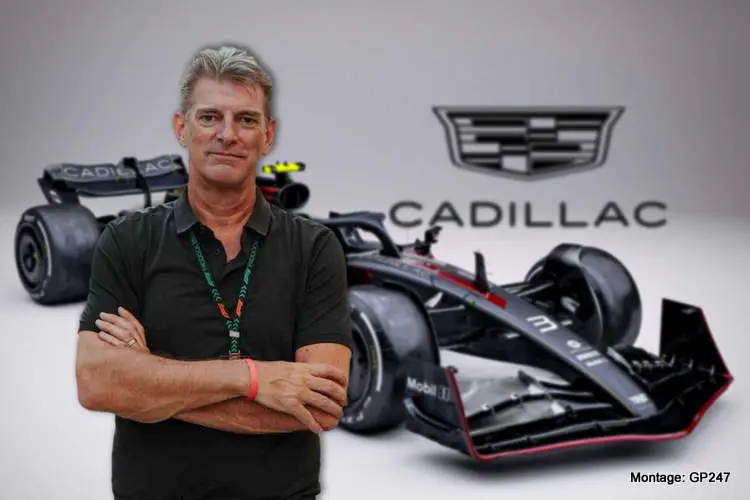
Graeme Lowdon was appointed Team Principal of General Motors’ backed Cadillac Formula 1 entry, to join the grid in 2026. He sat down for an exclusive interview with Agnes Carlier, our GRANDPRIX247 F1 correspondent.
The news of Lowdon, former Marussia Sporting Director, came after Formula 1 confirmed on 25 November that it had reached an agreement in principle with General Motors and Cadillac to support their bid as the sport’s eleventh team.
The statement noted that GM had met key operational milestones and expressed its intent to brand the team as GM/Cadillac, with plans to enter as a power unit supplier at a later stage.
59-year-old Lowdon will lead the project. The Briton last held an active F1 role with Manor Marussia in 2015 and has recently worked as an executive advisor to GM.
What is it like being a Formula 1 team principal? There is no team yet.
Lowdon: It’s very busy. We do have a team already—it’s growing—but there are still many components we need to put together. The days are long but productive and rewarding. We’re creating something from the ground up, and that’s what makes it so interesting.
We’re actually very close to Aston Martin, just outside Silverstone. There’s a road just off the circuit—a roundabout right next to the entrance. If you turn left, you go into the circuit; if you turn right, you reach the Cadillac facility. It’s only 200 metres away. It was an empty building, which we’ve now acquired, and we’re investing in it as our UK base.
The flagship headquarters, though, will be in Indiana. We’re building a world-class facility there—something that will be incredibly impressive, especially for American fans.
Why has GM decided to enter Formula 1?
Lowdon: It’s probably best you ask them directly, as I don’t want to put words in their mouth. I think any large manufacturer sees Formula 1 as a platform to showcase technical prowess and innovation. Cadillac, in particular, has a rich history of innovation—many things we now take for granted in everyday cars, like the electric starter, were pioneered by them.
One of the major attractions is the ability to demonstrate that innovation in front of a global audience. And make no mistake—Cadillac isn’t just a sticker on the car. GM is fully involved in this project. They’re committed.
GM and Cadillac also have strong motorsport heritage. They’re known in the racing world and have that competitive DNA. That makes them an ideal partner for a Formula 1 team.
This isn’t your first time running an F1 team. How different is it from Virgin or Marussia?
Lowdon: It’s actually not as different as people might think. My objective has always been to build a strong team. With Manor, we built a very capable group. We had to navigate a very difficult period—regulations changed overnight, and promises made to limit spending were quickly forgotten.
That situation was extremely challenging. But the core job remains the same: building a racing team. And the most important part of any racing team is its people. That part hasn’t changed.
Can you cope with the changes in Formula 1?
Yes, I believe we can. Formula One is the pinnacle of motorsport, but that’s because of the scale of the challenge. We wouldn’t be doing this if we didn’t believe we were capable. We’ve got experience. As the Americans would say, this isn’t our first rodeo. The intense competition, the regulation changes—that’s just part of the game.
What’s the secret to building a high-performing Formula 1 team?
Lowdon: It all starts with understanding and looking after people. When building a team, it has to be vision-driven and values-based. You must communicate a clear vision and give people a purpose. Teams are made up of individuals, and humans desire purpose. So, you create that sense of direction and back it with shared values.
For me, it starts with humility. You need to understand people, not act with arrogance. Yes, the challenge is huge, but so is the opportunity. We want to build something great, and that starts with a humble, grounded foundation.
Have you already started building your team?
Yes. Right now, we have just over 300 people working on the project. Considering we’ve only officially had the entry for about 12 days, that’s a strong start.
What’s important is that these people committed before we even had an entry. So, when we received the entry, we sent every one of them a personal letter. It was important to show that we value their belief in the project.
They could work anywhere. But they chose to join us. And for that, we’re grateful. We’re not just building a team—we’re building a high-performance team. That takes time, effort, and a people-first approach.
What’s the purpose of your visit to the paddock?
Lowdon: Now that the entry is official, it’s important for everyone involved—including our ownership group—to meet people, understand how Formula One works, and spend time integrating into the paddock.
We don’t want to arrive in Melbourne in 2026 not knowing where the turnstiles are. We want to feel part of Formula One from the outset. These are experienced people who’ve met many in the paddock before, but it’s about becoming part of the community—getting to know everyone: journalists, photographers, mechanics, security staff. Everyone.
What are your short-term ambitions?
We haven’t made any public declarations. That’s because performance is relative. Given how late our entry confirmation came, we have no right to expect anything other than to be at the back initially.
That said, we have great backing and great people, and our ambitions are limitless. It would be wrong to simply be satisfied with turning up. We’re not setting specific targets, but we are focused on delivering the best possible effort—and growing from there.
Have you spoken to any drivers yet?
There are a lot of names being mentioned, yes. I’m reading them too. But I won’t say any names right now, because that just becomes the focus. Like everything else, we’ll recruit on merit. We want the best people possible—including drivers.
Would it be important to have an American driver?
As I said, we’ll hire on merit. There’s nothing stopping an American driver from being the best candidate—and there are some very talented ones out there.
Who did you speak to first when you joined the project?
Lowdon: I joined as an advisor around 1,110 days ago. I didn’t expect the entry process to take as long as it did—it’s never taken that long before. Getting the entry wasn’t down to me—it was a group effort. My role was to help advise through what turned out to be a very thorough and, yes, at times, negative process. That’s just the reality.
Why did it take so long? Some teams didn’t want any new entrants last year.
Yes, we experienced that dynamic 15 years ago when new teams entered the sport. My view is that real champions welcome competition. There are still grid slots available. The best teams in the world should want to see those filled by strong contenders.
How did you convince the other teams?
We didn’t have to—and we shouldn’t have to. The teams don’t have a say in this. The entry process is governed by the FIA and Formula One Management (FOM). Our responsibility was to go through the process with them, which we did. It was very thorough and took time, but that’s how it should be.
Ferrari announced they will supply you with engines. Was it difficult to secure that deal?
Lowdon: Not at all. I’ve worked with Ferrari before, and it’s mostly the same people. There’s a real natural chemistry there. They’re incredibly competitive, but also collaborative. It felt like a natural fit from the beginning.
Finally, what’s next over the coming months?
Lowdon: We’ll continue building the team. Right now, our focus is on recruitment. We want this to be the best place to work in Formula One—not because of money, but because of how we treat people.
Everyone on the team, including me, has a training plan. We want to help every individual reach their own goals. If you build a team of great people who believe in something together, you’ll create something strong.
We’re building our first-ever Cadillac Formula One car. We’ll be racing against teams who have built hundreds. So we won’t pretend to have that experience yet. What we do have is belief in people—and that’s where our competitive edge will come from.
Latest News




Loading