Formula 1 return to V10s huge news if it happens? But why limit it?
F1 NewsTuesday, 25 March 2025 at 13:10
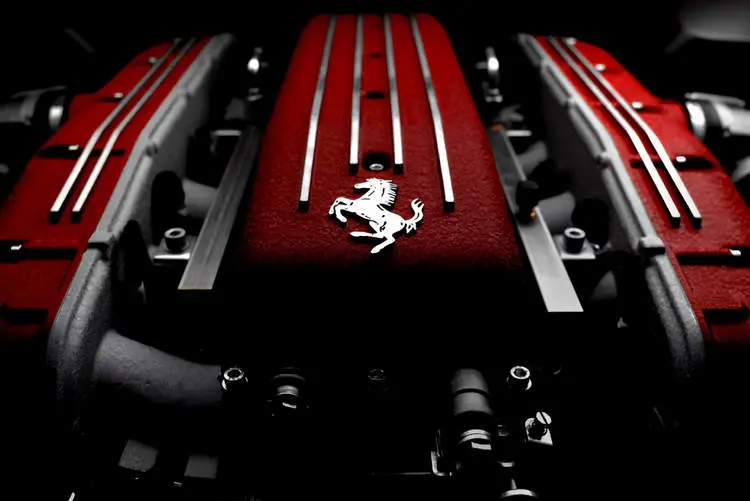
Speculation is rife over Formula 1’s return to 'green' V10 engines or power units. A popular and brilliant idea for the sport, but why limit it to V10s? Why not open it up all the way?
Anyone who ever had the privilege of witnessing Formula 1 in its glorious 3.5-litre era will attest. That noise was absolutely incredible. This is why, no matter what the detractors say, Formula 1 will be so much better should FIA capo Mohammed Ben Sulayem have his way with eco-friendly, cost-effective V10 engines.
The story goes that the FIA may even skip the proposed 2026 power unit rules in an effort to fast-track a return to e-fuelled V10s. Maybe even as soon as 2028. Which would be a bit of a challenge for the likes of the Red Bull Ford and Audi projects. Both of which came to F1 on the promise of those ’26 regulations.
Both the Blue Oval and Four Rings were, however, enticed by the prospect of Formula 1’s new e-fuels and zero-carbon approach. Rather than any actual power unit (sic.) or engine spec.
E-fuels are zero-carbon

In a nutshell, e-fuels are zero carbon. Rather than being mined or sucked out of the bowels of the earth, the crude oil used to create e-fuel is quite literally filtered out of the atmosphere. So when it is burnt, all the engine is doing is replenishing the carbon that was extracted from the air to create it back into the atmosphere.
In other words, burning e-fuel does not add carbon to the atmosphere. The fuel merely replaces the carbon that was absorbed to produce it. Zero carbon is added. It is only replaced. A win-win. Everybody is happy. That’s what Ford and Audi, and at a time, Porsche, loved about the 2026 rules set.
Best of all, it does not matter what specification of e-fuelled engines you use. Whether it’s a turbo hybrid V6, a V8, a V10 or V12, or even a V16, the effect is the same: zero new carbon is added to the atmosphere.
That glorious real Formula 1 noise will be so welcome back
Clearly FIA and FOM fan surveys continue to beg for good noise, too. So to move away from the planned sewing machine V6s, which are indeed just another take on today’s similar, characterless turbo hybrid V6s, has most people more than just excited. If you’ve heard a Formula 1 V10 in full song, you will understand.
It’s even a prospect that seems could hatch sooner, rather than later, if recent reports are to be believed. Which leads to another question. Why just V10s?
Formula 1 ‘purists’ will argue that the sport was at its very best in eras which offered a little more technical freedom. The mid to late ‘seventies, early ‘80s and early 1990s are cases in point. The earlier era delivered everything from boxer flat-12s and V12s to V8s and turbo V6s and fours. The cars, too, were radically different from team to team.
Variety is the spice of life.
Variety is the spice of life.
Variety is the spice of life

There were even six-wheelers in a wild mix of machinery that, by its diversity, made it even more interesting. By the ‘90s the chassis was a little more common in design across the board, but there were once again some most interesting engine choices.
From the faithful Ford V8s through Honda and Renault V10s to Honda, Ferrari, Lamborghini, Yamaha and other V12s and even a mad W16 and lingering flat-12 projects. It had it all.
The point here is simple. If Formula 1 wants to go back to brawny, naturally aspirated engines, why limit it to V10s? Why not open it up and also allow any engine format? From affordable, nimble V8s to omnipotent V10s and sonorous V12s, and even a forced induction option. But a third of the capacity of the Atmo cars.
Bring it all back. Not just Formula 1 V10s!
Let the teams decide the engine they want to run. Give the engine builders the freedom to explore new limits. Bring variety back to Formula 1. The limits of aerodynamics may prevent wild designs these days. But open the engines up to any configuration. Within a simple set capacity and materials constraints.
The arrival of e-fuels offers a most welcome engine delta to the sport. Something we’ve missed for years. And something that could make tomorrow’s Formula 1 all that much more interesting, too.
Latest News






Loading