Sunday’s Formula 2 feature race may have been rained off, but there was still plenty of evidence across the weekend to suggest that the future of top-tier motorsport is in safe hands.
F2 rolled into Melbourne amid a flurry of questions. Would the cars perform on near-fully synthetic fuel? Could the latest batch of rookies replicate the dazzling performances of promoted predecessors like Isack Hadjar, Kimi Antonelli, and Gabriel Bortoleto? With rain hammering down in usually sunny Australia, would we get to see them in action at all?
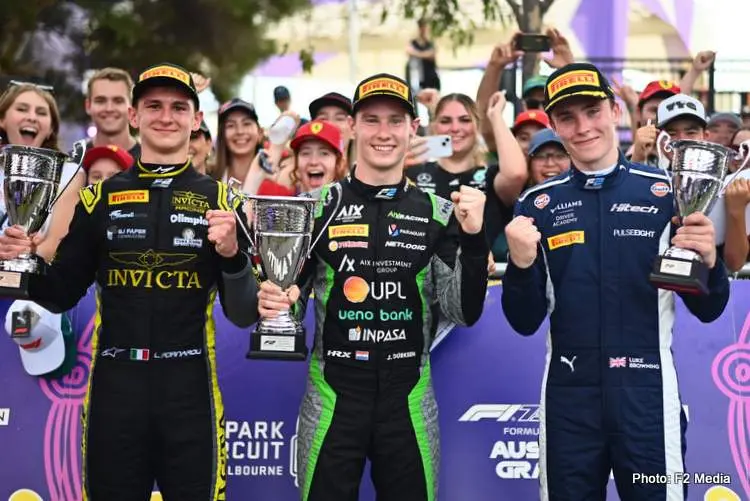
Thankfully, Saturday’s sprint answered all these questions with an emphatic yes. Race winner Josh Dürksen was outstanding throughout, expertly managing two safety car restarts. Formula 3 champion Leonardo Fornaroli also seemed up for the fight from the outset, picking up a well-earned second place, and several on-track clashes set up a mouthwatering season to come.
A first look at the future of Formula 1?
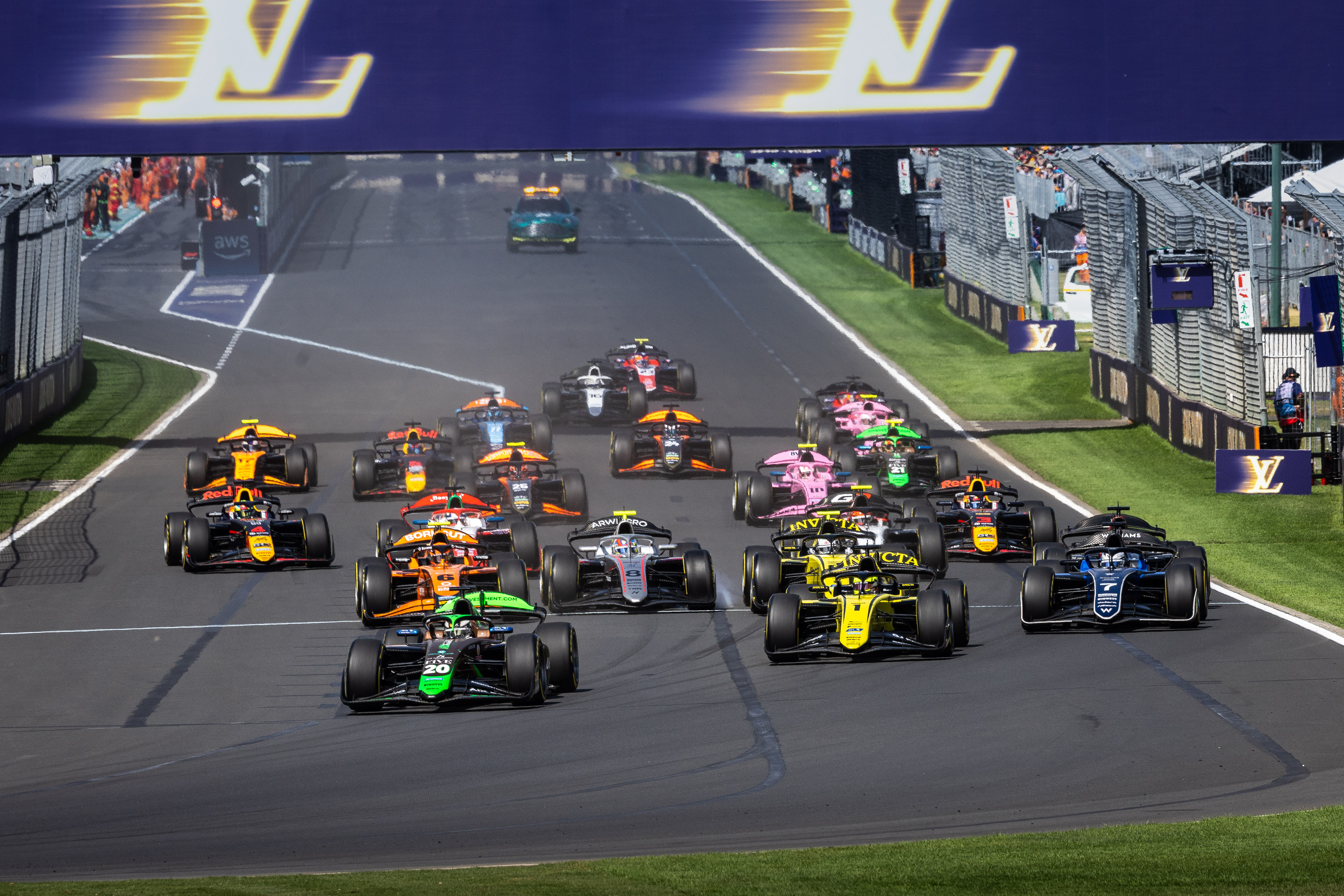
Fornaroli started on pole in the reverse grid sprint as he began his bid to become the fourth driver to win F3 & F2 back-to-back. But it was Dürksen who sailed through into the lead at turn one, before managing his pace brilliantly to win a hotly contested 23-lap race.
Sebastián Montoya also fought his way up to fifth in front of his watching father — F1 icon Juan Pablo Montoya — while Frenchman Victor Martins looked rapid all weekend, right up to the race, only to run wide on the opening lap and bin it shortly afterwards.
Elsewhere, Dino Beganovic pulled off a daring overtake around the outside of Roman Stanek that would make many F1 drivers blush, while the returning Oliver Goethe finished a very scrappy eleventh. Despite the many spinners, all this action underlined what Red Bull junior Arvid Lindblad had said before the race: F2 is getting closer to F1 than ever before.
Lindblad said: “Obviously, it’s amazing for the championship. That’s the objective, to promote drivers to Formula 1. Credit to everyone at Formula 2 & Formula 3. The level at the moment is really high, so it’s good for all of us.
“I think good performances give an even better chance of getting into Formula 1 than in previous years. But that’s all very easily said and done. Here and now, I’m just going to get on track, do my best, and see what happens.”
Reverse grid racing delivers (yet again)

Once again, F2’s reverse grid format served up some sizzling overtakes. Grabbing pole for the feature race saw PREMA’s Gabriele Minì drop down the pecking order. But he battled back valiantly to take points in seventh place. Dürksen and Fornaroli, meanwhile, were able to scrap for the win despite qualifying ninth and tenth, respectively.
The reverse grid naysayers will point to the fact that the feature race was cancelled — leaving the fastest qualifiers out of pocket. Across the season, though, things will balance out. And the format will only provide more opportunities for midfield drivers as the campaign goes on.
On the flip side, qualifying became a bit of a borefest at the end. All the teams ran two sets of the same tires, limiting variability between the drivers and leaving them out of rubber on the final lap. As a result, there was no room for last-minute drama. A mandatory sprint race pit stop would also have spiced things up even more. Maybe there are lessons for the FIA to learn here!
Formula 2 fans and drivers left empty-handed
Fortunately for the thousands of fans who trekked to Melbourne, the . But after some dithering, the stewards eventually chose to cancel the F2 feature race, leaving rain-soaked spectators without an appetizer for the main event.
“I feel sorry for the fans who wanted to see us race and also for our teams and drivers who came all the way to Melbourne, but safety takes precedence,” said F2 CEO Bruno Michel.
“We tried everything we could to make it happen, but ultimately, the track conditions were too dangerous, which the drivers confirmed over the radio, so the right call was to cancel. We focus now on Bahrain,” he added.
While there were literally ducks on track at turn two, there’s a strong argument that F2 should be able to run in the wet. After all, how else can these fledgling drivers practice for F1? The FIA better get those spray guards ready pronto! Or take another look at those wet tire compounds.
There was also too tinkering from race control

Washed-out race aside, there were other issues with this year's F2 format. Drivers promoting academy teams in their liveries sounds perfectly reasonable, until you realize that teammates are now incredibly difficult to spot. There was also too much tinkering from race control.
Minì (above) was stripped of pole position for an incident in qualifying and given three-place penalties for both races. Rodin, Trident, and DAMS also arrived in Australia with ten-place penalties for all their drivers due to issues in testing. This made the action even trickier to follow.
That said, this fresh batch of F1 hopefuls are only just finding their feet. And they still delivered on race day. It'll be exciting to see what they serve up next time in Bahrain from 11-13 April, 2025.
Stay tuned for the rest of the Formula 2 season as we follow the next generation of drivers on their journey towards Formula 1.
loading
Latest News
Loading