Ecclestone’s billion-dollar grip: How one man owned Formula 1
F1 NewsTuesday, 11 February 2025 at 08:30
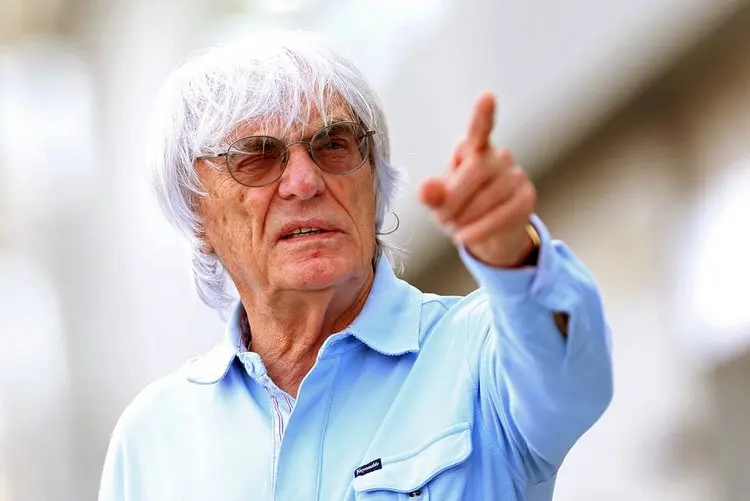
Formula 1’s transformation from a niche motorsport to a global commercial empire is largely the work of one man: Bernie Ecclestone.
His rise from a used motorcycle salesman to the sport’s financial overlord is a story of shrewd deal-making, strategic conflicts, and controversial financial manoeuvres that left Ecclestone controlling the sport’s commercial future and building a personal fortune worth $2.4-billion according to Forbes.
By securing long-term rights to F1’s television revenues, race hosting fees, and sponsorship deals, Ecclestone became one of the richest individuals in Britain. His hold over the sport was so strong that even legal challenges, opposition from teams, and European regulatory investigations failed to loosen his grip.
On 28 June 2000, the FIA convened an extraordinary session in Geneva, where over 70 national motoring associations voted unanimously to extend F1’s commercial rights to Ecclestone’s company, Formula One Management (FOM), for 100 years—until 2110.
The meaning of the century-long deal

The agreement, worth $360-Million, was passed in complete secrecy, with no competitive bidding. Ecclestone was the sole candidate, ensuring his continued monopoly over F1’s financial structure.
The deal meant that Ecclestone, through FOM, held:
- Exclusive rights to negotiate with race promoters and collect hosting fees.
- Full control over global television deals, covering an audience of five billion viewers per season.
- Authority over trackside advertising, corporate hospitality, and sponsorship revenues.
Although the FIA remained responsible for regulatory oversight—setting technical rules, approving circuits, and enforcing safety regulations—it had effectively surrendered control of F1’s financial ecosystem to Ecclestone.
From Brabham to the Pinnacle of Power

Ecclestone’s journey to F1’s commercial throne began in 1971, when he purchased the Brabham F1 team. At the time, the sport was disorganised, with amateur team owners, dangerous circuits, and limited television coverage. Most team principals were former racers or engineers, uninterested in the business side of the sport. Ecclestone recognised an opportunity.
By the mid-1970s, he had positioned himself as head of the Formula One Constructors’ Association (FOCA), representing teams in negotiations with race promoters and broadcasters. This made him the de facto business manager of the sport.
But a power struggle soon emerged between FOCA and the FIA, particularly over control of television revenues. Ecclestone and his legal advisor Max Mosley fought to shift F1’s financial power from the governing body to the teams—and, ultimately, to himself.
The Concorde Agreement: A Turning Point

After years of conflict, the 1981 Concorde Agreement established the financial framework that would change F1 forever. Under this deal:
- The FIA retained regulatory authority, but its commercial rights were leased to FOCA for four years.
- FOCA managed the TV rights, ensuring a share of revenue for the teams.
- A guaranteed television deal with the European Broadcasting Union (EBU) ensured every F1 race would be televised across Europe, boosting sponsorship value.
This marked the beginning of F1’s transition from a chaotic sport to a structured, commercially driven enterprise.
By 1987, Ecclestone had further consolidated control by securing another Concorde Agreement, which shifted financial rights from FOCA to his own company, Formula One Promotions and Administration (FOPA).
This effectively removed the teams from direct financial control, ensuring that Ecclestone’s companies, rather than FOCA, would handle the revenue streams.
Offshore Deals and Financial Secrecy

Despite F1’s growing revenues, the financial structure remained opaque. Investigations revealed that, between 1987 and 1996, an estimated $120-Million that should have gone to the FIA was instead redirected to offshore companies linked to Ecclestone.
The most significant of these was Allsopp, Parker & Marsh (APM), an Irish and Guernsey-based entity with ownership shrouded in secrecy.
- The FIA had surrendered 30% of TV revenue to APM, despite the sport’s rising global audience.
- APM’s registered owners were close associates of Ecclestone, including his Swiss lawyer Luc Argand and business partner Paddy McNally.
- APM profits, which were substantial, bypassed British tax regulations and were not properly disclosed.
FIA President Max Mosley defended the arrangement, arguing that the FIA had been unsure of F1’s future television revenues. However, given the sport’s rising popularity, critics questioned why such a lucrative revenue stream had been given away for a fraction of its value.
Tightening the grip amid legal battles and investigations

Beyond television rights, Ecclestone forced race promoters into agreements that benefited his companies:
- Circuits were required to cede advertising rights to Ecclestone’s entities.
- Corporate hospitality (Paddock Club) became a monopoly under his control.
- Promoters had to surrender media rights and agree to non-compete clauses.
Ecclestone even became a race promoter himself, running events such as the Belgian Grand Prix at Spa-Francorchamps. This led to conflicts of interest, where he was negotiating with himself in different business capacities.
Despite his dominance, Ecclestone faced legal and regulatory challenges:
- A 1971 tax case where he was found guilty of financial misconduct after failing to pay £10,000 in corporate taxes.
- A civil case against FOM, in which a judge remarked that Ecclestone “has not been a man of his word” and cast doubt on his credibility as a witness.
- The European Commission’s antitrust investigation into whether Ecclestone’s control over TV rights violated EU competition laws.
EU Commissioner Karel Van Miert called the F1 investigation “the most menacing case” he had pursued, though no regulatory action was ultimately taken.
Bond Issue, the 1998 Concorde Agreement and the 100-Year Deal

By the late 1990s, Ecclestone sought to float Formula One Holdings (FOH) on the stock market. However, resistance from top teams—including McLaren, Williams, and Tyrrell—delayed his plans.
Instead, in 1999, he raised $1.4-Billion through a bond issue, securing capital without losing control. The deal was underpinned by:
- Revenues from race promoters.
- Broadcasting contracts locked in via the Concorde Agreement.
- Backing from WestLB, a German state-owned bank, which bought a significant share of the bonds.
This ensured that Ecclestone’s family trust retained its financial grip on the sport without outside shareholder interference.
The FIA’s 2010 decision to grant Ecclestone commercial rights until 2110, extending from the previous deal that expired in 2010, was the final step in securing his empire and the fast flight to becoming a billionaire.
While NASCAR’s American TV rights alone fetched $400-Million per year, FOM’s total TV revenues for 1999 stood at $241-Million. Analysts suggested that Ecclestone was deliberately underpricing TV rights in exchange for restrictive contracts preventing broadcasters from covering rival motorsport series.
A Legacy of Power and Controversy

With teams bound to his commercial framework and promoters locked into long-term agreements, Ecclestone ensured that his legacy in F1’s financial structure would outlive his direct involvement.
Ecclestone’s financial strategies turned Formula 1 into a global powerhouse, with billions in annual revenue from television, sponsorship, and race hosting fees.
However, his control also sparked criticism:
- Teams received a smaller share of revenue than expected.
- Fans faced higher ticket prices and pay-TV restrictions.
- His close relationship with Mosley reinforced the belief that F1 was run by a closed circle of insiders.
Despite legal challenges and opposition from teams, Ecclestone’s hold on F1 was never truly broken. His ability to centralise power and control the sport’s commercial rights remains one of the most extraordinary financial manoeuvres in sporting history.
For better or worse, modern Formula 1 operates within the framework he built—one where financial control remains locked into long-term agreements he orchestrated.
[Source: This report was inspired by an intensive study found on the University of Coimbra (Portugal) website and first published in the Economist. Fact-checked, verified and summarised for easier reading.]
Latest News
Loading
![Ben Sulayem: I treat drivers like my sons and daughters [so no swearing]](https://r.testifier.nl/Acbs8526SDKI/resizing_type:fill/width:256/height:170/plain/https://s3-newsifier.ams3.digitaloceanspaces.com/grandprix247.com/images/2025-11/ben-sulayem-fia-verstappen-rwanda.jpg@webp)