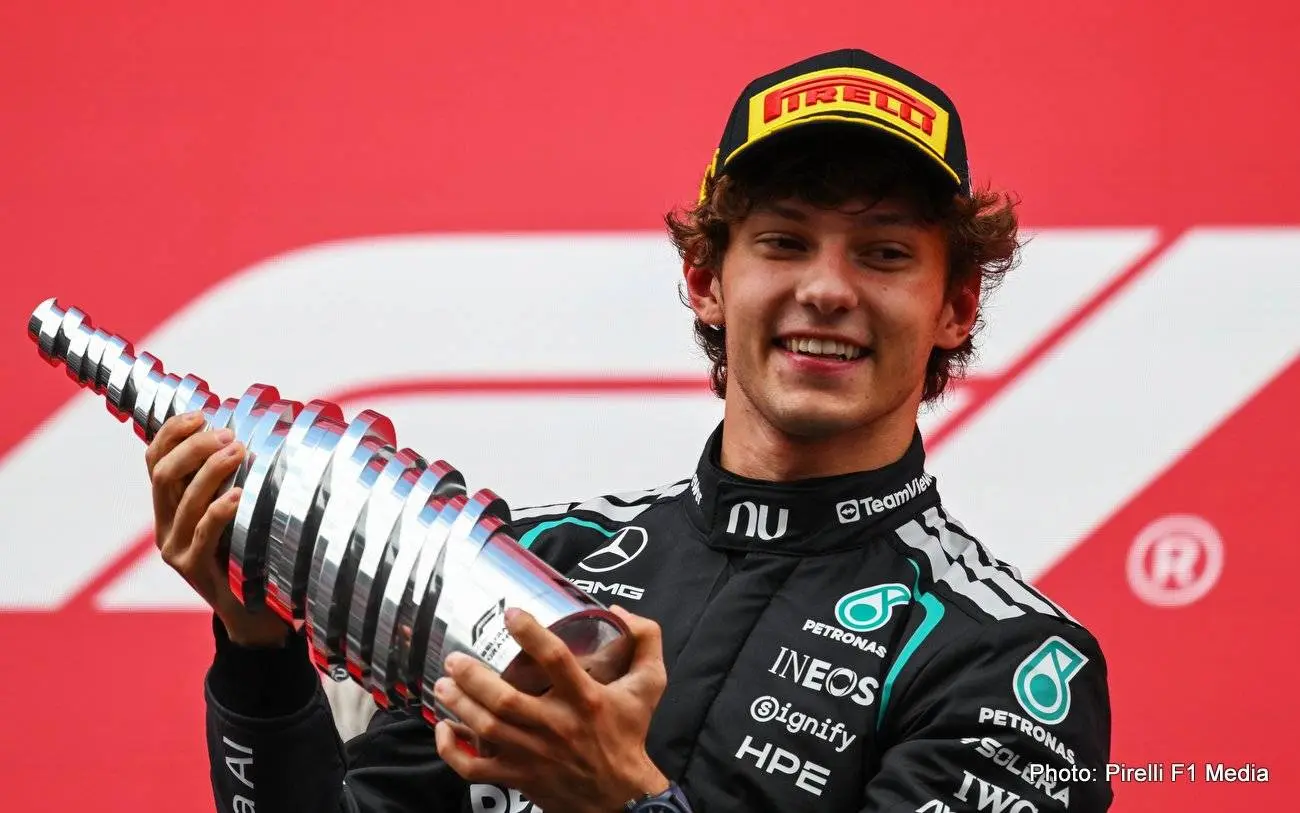
Mercedes have chosen Andrea Kimi Antonelli to replace Lewis Hamilton alongside George Russell for the 2025 Formula 1 season, but why have they taken that decision?
Many have been skeptical about Mercedes' choice to replace Hamilton with Antonelli for 2025 despite the latter's lack of experience in the F1 feeder series, having been catapulted into Formula 2 without going through Formula 3.
Mercedes' talent spotter Gwen Lagrue saw something in Antonelli when he was still in karts, and at 11 years of age, the Italian was signed by the German marque.
Antonelli made his car racing debut at the age of 15 and went on to win championships in the Italian and German F4 series. He also won the Formula Regional Europe (FRECA) in his rookie year but was then placed in F2 with Prema.
Keeping in mind that Prema struggled in 2024, Antonelli did not set the world alight with his performances and finished sixth in the championship, winning one sprint and one feature race.
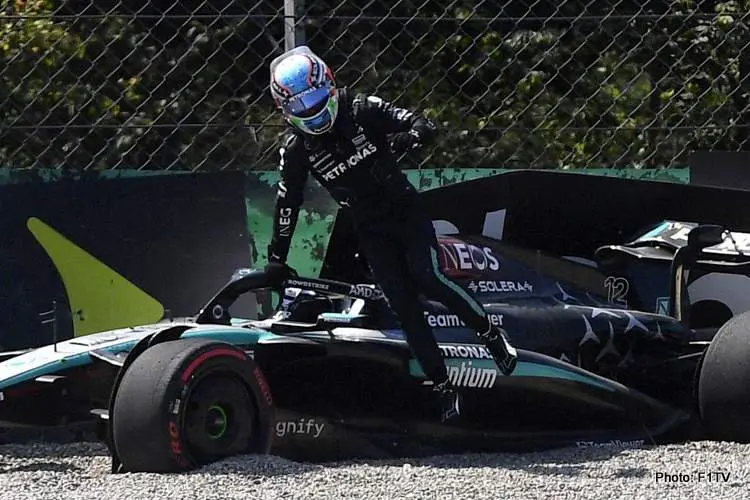
That did not stop Mercedes boss Toto Wolff from taking a leap of faith with Antonelli, who crashed on his F1 practice debut in Monza. He did another session in Mexico City.
As such, Antonelli will become the youngest driver on the 2025 F1 grid, and as the world waits to see how he will perform when thrown into the deep end, Lagrue, the man who discovered him and guided him so far, explained why the 18-year-old is the real deal.
Adaptation was a strong trait Antonelli showed

Speaking to Motorsport, Lagrue said: "With Kimi I noticed quite quickly he was already a bit different than other kids in karting.
"But back then my thought was: 'Okay, he's the best one I can have in go-karts', not even thinking about Formula 1.
"Then when we did the first test in single-seaters, the way he adapted himself so quickly to pretty much every situation you started seeing that you have someone very special.
"Of course, that doesn't mean he has everything," the Italian admitted. "You still need to work a lot to help him to grow, to guide him, to also let him make mistakes. It's part of the learning process.
"And then, to me, Formula Regional has developed quite well recently in terms of driver preparation and we have seen over the years that all the kids coming from it - or before when it was called Formula Renault Eurocup - to F3 or F2; they were performing, and they were most of the time the ones winning," he explained.
With that said, F2 was the next logical step, according to Lagrue who added: "So, when Kimi did perform that well in FRECA, I was not super convinced at that time that first going to F3 will develop him more.
"I wanted also to put himself In a situation where eventually he could face more challenges, and sending him to F2, of course, it required a bit of preparation.
"But it was also to put him into an environment where he had to find some personal limit he never faced before. I'm not saying that he won always easily, but kind of.
"He was always dominating, and he was always the one to beat, rather than the one chasing someone, even if we had some good competitors, like [Ferrari junior Rafael] Camara, for example, or a few others, he was on top of everything.
"So by doing that, we were making sure that first he will learn the new F2 with the idea of eventually doing another year of F2 if it was challenging, or depending on the situation in F1, make sure that at least we will accelerate his preparation to Formula 1.
"Of course, he was confirming what we were thinking series after series, let's say," Lagrue maintained.
Prema's struggles highlighted another strong point

Antonelli impressed Lagrue and Mercedes in the manner he dealt with the struggles of Prema in the 2024 F2 season.
Lagrue continued: "I would say that normally you have a certain consistency in terms of teams leading F2, so we know that Prema, ART, Carlin, or a few others are the teams you have to work with if you want to deliver in F2.
"But the new F2 actually brought some new challenges, and we have seen that the big teams were not adapting that well to F2.
"Prema was performing super well and had top engineers. We put Kimi in there thinking, we will put him in a very strong environment, and we will normally deliver strong results. And it appears that we struggled a little bit.
"But in a way, it was also very interesting because having Kimi dealing with such challenges made us discover part of him we haven't seen before," he pointed out. "We had to help him to deal with difficult weekends, which never happened before.
"He was used to winning all the time, or to fighting for the win, and this year was the first time actually he had to deal with not winning and not performing, and sometimes even have really, really tough weekends.
"And I have to say that I was very impressed with his maturity and his leadership in such a difficult situation. And at the end of the day, he has still done a very, very strong season in F2 considering all we had to deal with this year," Lagrue concluded.
Latest News
Loading