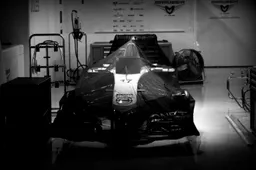
Jules Bianchi Ten Years On: From his finest day to his tragic passing
F1 NewsSunday, 06 October 2024 at 14:33
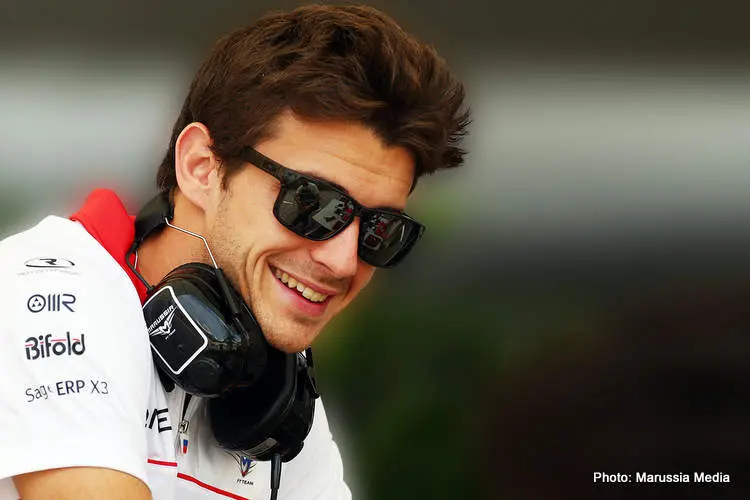
It was ten years ago, on Sunday, 5 October 2014, when Jules Bianchi, on Lap 41, of the Japanese Grand Prix at Suzuka, the Frenchman crashed his Marussia during torrential rain. He died on 17 July 2015 in a hospital in France.
Over the past decade, this date has tended to prompt reports of Bianchi's legacy and good memories of him, including a street named after him in Nice.
However, the Formula 1 world was denied a driver expected to become F1 World Champion and developed by Ferrari to lead the next generation until that cruel day at Suzuka robbed us of the 25-year-old.
Below we document the sad story of a much-missed driver, the Bianchi story, as told through our website posts over the years as we pay homage to the memory of a star that was not allowed to shine as brightly as it might have.
Jules Bianchi's finest day in Formula 1

Jules enjoyed his finest day in Formula 1, finishing ninth in the 2014 Monaco Grand Prix for Marussia, equivalent to today's Stake Sauber F1 Team, only slower and at the time the sports perennial backmarker team at the time.
The drive on the day, from the back of the grid, was packed with drama and sublime skill, including two stop-and-go penalties as well as some choice overtakes—a memorable one on Caterham driver Kamui Kobayashi—around the notorious confines of the Monte Carlo street circuit.
Bianchi said after the race, “Wow. What a race and what a result for the whole team. I am just incredibly happy, but first of all, I have to pay credit to everyone at the Marussia F1 Team for making this possible. Nobody knows just how much work and determination goes into our races.
"It felt like a victory to me. Even if it does not mean so much for others, for us this ninth place is like a win. I am thrilled that I have helped them to achieve their long-held target of our first points.
"My thanks to everyone here in Monaco, the rest of the Team in Banbury, and also to our powertrain partners, Scuderia Ferrari, because together we have all made great progress, particularly since the Barcelona Test. This gave us the confidence to push, and we certainly did that here this weekend."
Jules: To achieve them together makes me very proud

Bianchi added: "It was not an easy race; there were some enjoyable highs along the way, but also a couple of concerning moments too. What matters at the end is that we got there, and we can savour the highlights for a long time to come. I would also like to thank the Ferrari Driver Academy, who support me every step of my career."
At the time, Bianchi also admitted that Monaco 2014 could be the turning point in his career: “It can only help, but as for the future, we will have to see as the season progresses. I do feel ready for a top team.” And that team would, most likely, have been Ferrari...
Bianchi’s manager, Nicolas Todt, said on the day, “It is often said that Monaco is a driver circuit. Yes, he benefitted from what happened in the race, but when you see his lap times, he had the pace." Alas, fate had other plans.
In Japan, on that tragic dark day at Suzuka, Bianchi collided with a recovery vehicle, suffering a diffuse axonal injury. He underwent emergency surgery and was placed into an induced coma and remained comatose until his death on 17 July 2015.
Bianchi family's suffering and anguish in accident aftermath
![©WRI2/MAXPPP - Jules Bianchi (FRA), Scuderia Ferrari with his parents Philippe and Christine. Yas Marina Circuit. Young Drivers F1 Test Abu Dhabi 16-17/11/10 (MaxPPP TagID: maxsportsworldtwo197824.jpg) [Photo via MaxPPP]](https://www.grandprix247.com/wp-content/uploads/2015/07/Christine-Jules-et-Philippe-Bianchi.jpg)
Six months after the Suzuka, Jules’s father, Philippe Bianchi, admitted he was angry about the investigation into his son’s horror crash during the 2014 Japanese Grand Prix as his son lay in a coma in his native Nice.
At the time, Philippe agreed to an interview with the local Nice-Matin newspaper “out of respect for all the people who continue to send Jules their beautiful wishes, encouragement, and affection every day.”.
But he admitted that even six months after the crash, there was little to report about Jules’ progress: “The only thing we can say is that he fights with the same strength that he has always fought with, before and after the accident,” said Philippe.
“Every day, Jules does a marathon. From a medical perspective, his condition is stable. He is fairly autonomous—nno physical problems. All of his organs are working without assistance. But for now, he remains unconscious.
Signs in the hospital were not good

Asked if the neurosurgeons in Nice have noticed any improvement in Bianchi’s brain state, Philippe answered, “For this kind of trauma, we know the evolution is very slow. But compared to what the Japanese professor who operated on him told us, it is already night and day. There, when we arrived to see Jules, there was no hope. There was talk of irreversible damage.”
“It was said he could not be transferred before one year, but it was done after seven weeks, as Jules quickly began to breathe again on his own."
“Now, the doctors tell us there is no specific intervention they can do. Most important is to stimulate Jules so that he feels a constant presence at his side.
“So we take turns every day—his mother, his sister, his brother, and me. He also has his German girlfriend, Gina, who lives here now,” Philippe revealed.
“From time to time,” he continued, “at his bedside, we see that things are happening. Sometimes he is more active; he moves more; he squeezes our hand—but is it mere reflex or is it real? Hard to know,” Mr. Bianchi acknowledged.
Phillipe: This type of accident, hits harder than a death

Phillipe said it continues to be a terrible time within the family of the promising French driver. “Our universe collapsed on 5 October 2014. The questions that no one can answer now: will he make it? If so, will he be disabled, or can he live normally?
“I think that in this type of accident, it hits harder than death. The suffering is relentless. A daily torture,” he explained. To those people who think of him, I want to thank. And tell them that we will give news when there is any, good or bad.”
As for the FIA investigation that essentially blamed Bianchi for the Suzuka crash, however, Philippe sounded furious: “It was an internal investigation. Only those who were involved were engaged.”
“Regarding this, I have nothing new to say,” said Mr. Bianchi. “Very good people are involved now to defend the interests of Jules.
“If someone is responsible someday, he will have to pay. Frankly, I’m too upset to talk about it. I prefer to focus my energy on Jules now,” he added. At the time we wrote, GRANDPRIX247 can only say: Forza Jules!
Jules fought right to the very end

Three months later, we had to report the statement released by his family: French Formula 1 driver Jules Bianchi has died of critical head injuries sustained at last year’s Japanese Grand Prix. He was 25.
The family statement added: “Jules fought right to the very end, as he always did, but today his battle came to an end. The pain we feel is immense and indescribable.”
“We wish to thank the medical staff at Nice’s CHU who looked after him with love and dedication. We also thank the staff of the General Medical Centre in Mie Prefecture (Japan) who looked after Jules immediately after the accident, as well as all the other doctors who have been involved with his care over the past months.
“Furthermore, we thank Jules’ colleagues, friends, fans, and everyone who has demonstrated their affection for him over these past months, which gave us great strength and helped us deal with such difficult times.”
“Listening to and reading the many messages made us realise just how much Jules had touched the hearts and minds of so many people all over the world. We would like to ask that our privacy is respected during this difficult time, while we try to come to terms with the loss of Jules.”
Jules Bianchi for us will always be a driver with greatness embedded within him, but Fate had other plans for him, his family, Marussia, Ferrari and all of F1, particularly the drivers on the grid currently, who he touched and inspired.
Photo Memories of Jules Bianchi 1989-2015


![©HOCH ZWEI/DPA/MAXPPP ; Motorsports: FIA Formula One World Championship 2014, Grand Prix of Japan, #17 Jules Bianchi (FRA, Marussia F1 Team), (MaxPPP TagID: maxpeoplefrthree631270.jpg) [Photo via MaxPPP]](https://r.testifier.nl/Acbs8526SDKI/resizing_type:fit/width:1280/plain/https://s3-newsifier.ams3.digitaloceanspaces.com/grandprix247.com/images/2016-05/formule-1-le-pilote-francais-jules-bianchi-est-mort-69259dad45a19.jpg@webp)


loading
Latest News

Loading