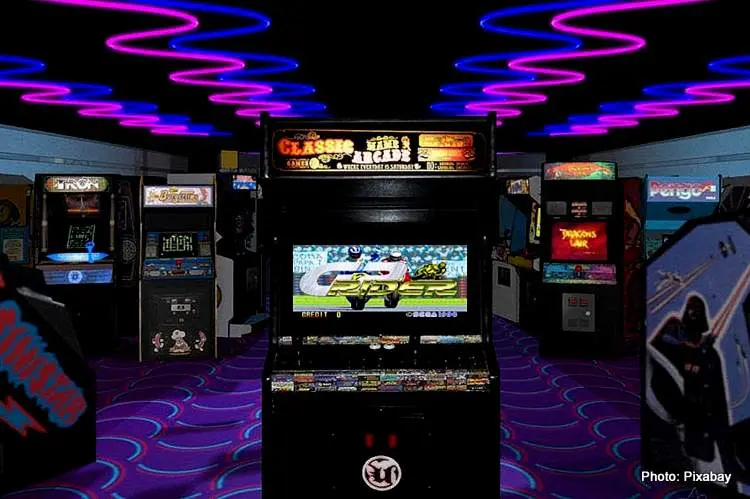
Video racing games have come a long way since their humble beginnings. Over the years, these games have evolved, allowing players to immerse themselves in the exhilarating world of motorsport.
In the early days of gaming, racing games were basic and pixelated, yet they ignited the spark for the genre. Actually, this relates to all games, be they shooters like Counter-Strike with its pixelated AK 47 skins or adventure games like The Legend of Zelda with its flat levels.
From the arcade classics to the cutting-edge simulations of today, the genre has continuously pushed the boundaries of realism, providing an exciting and authentic experience for racing enthusiasts. PC sim racing have been around since the 1990s, when serious developers made a foray into the genre.
The Birth of Racing Games

Papyrus, publishers of legendary early generation titles such as Grand Pix Legends and Nascar Racing which has since morphed into iRacing. A massive online racing community that boasts the likes of double F1 world champion Max Verstappen and fellow F1 drivers on the platform. That counts six-figure members.
And there are more titles that have emerged, boasting state-of-the-art graphics and physics. But where did it all begin?
With titles like Pole Position, and Out Run, which introduced players to the thrill of speed and competition. These games featured simple graphics and gameplay mechanics and laid the foundation for future advancements in the genre.
As technology progressed, racing games transitioned from pixelated tracks to 3D polygons, opening up new possibilities for visual accuracy and immersion.
Arcade Era: High-Octane Fun for Everyone
The advent of arcades brought racing games into the mainstream. Titles like Daytona USA and Cruis'n USA captivated players with their flashy cabinets, force feedback steering wheels, and pedal setups.
These arcade machines provided a thrilling multiplayer experience and accessible gameplay, allowing players to compete against friends or strangers in intense races. The arcade era introduced a social aspect to racing games, creating a competitive atmosphere that fueled the desire for more immersive and realistic experiences.
Simulations: The Pursuit of Realism

With the advancement of home consoles and personal computers, racing games began to shift towards simulations, aiming to replicate the intricacies of real-world motorsport. Titles like Gran Turismo and Forza Motorsport embraced realism, offering a vast selection of meticulously detailed cars, accurate physics models, and true-to-life tracks.
These games allowed players to fine-tune their vehicles, making adjustments to suspension, tire pressure, and aerodynamics. Simulations became a playground for car enthusiasts, offering a deep and immersive experience that demanded skill and strategy.
Online Multiplayer Racing Games
The rise of online gaming brought a whole new dimension to motorsport video games. With the ability to connect with players around the world, racing enthusiasts could compete in multiplayer races, form virtual communities, and participate in organized leagues.
Titles like Need for Speed and Project CARS enabled players to test their skills against opponents of varying skill levels. Online competitions, championships, and leaderboards added a sense of camaraderie and competition, further enhancing the racing experience.
Esports: Racing Games as a Spectator Sport

Motorsport video games have now entered the realm of esports, attracting a large audience of spectators and professional players. Titles like F1 Esports Series and Gran Turismo Sport feature organized esports tournaments where players compete for cash prizes and recognition.
These events are broadcast globally, with fans cheering for their favorite players and teams. Esports has transformed motorsport video games into a spectator sport, blurring the lines between virtual and real-world racing.
Virtual Reality
The introduction of virtual reality (VR) technology has revolutionized the way players interact with racing games. VR headsets like the Oculus Rift and PlayStation VR allow players to step into the driver's seat, offering a heightened sense of immersion and presence.
With VR, players can look around the cockpit, judge distances with depth perception, and experience a realistic sense of speed. Titles like Assetto Corsa and Project CARS 2 have embraced VR, providing an unparalleled level of realism and intensity.
Bottom Line
From their humble beginnings to the present day, motorsport video games have evolved into immersive, realistic, and socially connected experiences. The genre has progressed from simple pixelated tracks to the stunning graphics and physics simulations of today's cutting-edge titles.
Whether you're a casual player or a dedicated racing enthusiast, the evolution of motorsport video games offers something for everyone.
With advancements in technology continuing to push the boundaries, we can only anticipate even more exciting and realistic racing experiences in the future. So buckle up, put your foot on the accelerator, and get ready for the thrilling journey that awaits you in the world of motorsport video games.
Latest News




Loading