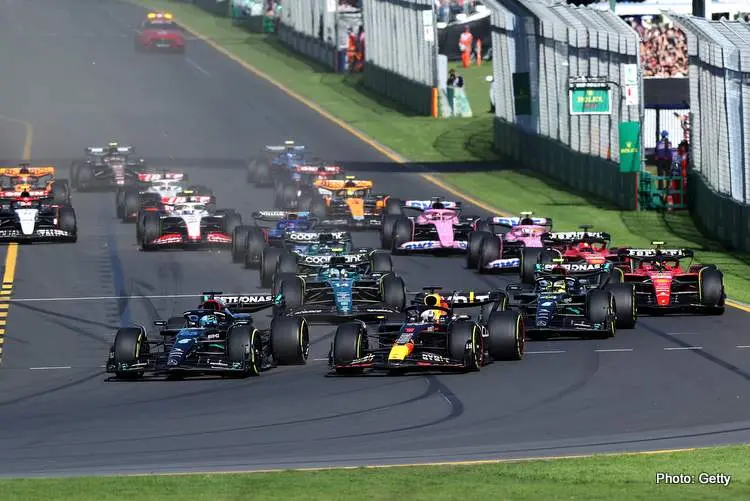
Formula 1 has changed quite a bit over the years, and with talk of even more changes to come, putting the current race weekend format under the spotlight. What kind of future is in store for our precious F1?
Ever since Liberty Media acquired Formula 1 back in 2017, the sport has been undergoing considerable changes as the new owner sought to "improve the show" and build a bigger fan base, which followed the first major shift into hybrid power back in 2014, when the high revving, naturally aspirated, screaming 2.4L V8 engines were dropped in favour of Turbo-Hybrid 1.6L V6 power units; in the pursuit of sustainability and an environmentally friendly future for the pinnacle of motorsport.
At that time, many welcomed the new power units, while many were against them, as a major aspect of F1's character, the noise was lost, and while sustainability was a target, the new power units turned out to be very expensive and overly complicated which meant they contradicted one of the reasons behind their conception.
Changes in 2014 did not only include the power units but there were some aerodynamic changes as well. However, the major technical changes for aero came in 2017 with wider cars having bigger wheels and front and rear wings to increase downforce and make the cars faster in the corners; and while that was the intent which resulted in the fastest cars in the history of F1, the 2017 machines couldn't race each other as they were overly sensitive to the wake (dirty air) of the cars they are chasing.
Apart from the F1 power unit changes in 2014, aero rules for 2017 were a double-edged sword as they delivered undesirable outcomes in addition to the intended ones, but we are not going to debate whether these changes are right or wrong, we are going to look into how F1 has moved on from them, as in both cases, the sport was able to dig itself out of the hole it got into in the first place.
My opinion piece comes in the aftermath of the major criticism and debate F1 has faced recently, with Sprint Races, race officiating, dumbing the sport down and the list goes on, but I will attempt to inject some optimism here regarding the future of the sport.
A decent compromise?
We at GrandPrix247 have genuinely believed Sprint Races are not aligned with F1's DNA, as qualifying should always decide the starting grid of the Grand Prix, and we were also bewildered by Formula 1 CEO, Stefano Domenicali, saying he was pro-changing F1 race weekend formats.
But somehow, with the new Sprint weekend format F1 is planning to test in Baku, it seems a decent compromise has been found; between changing the show and making it more exciting, while conserving the sport's DNA.
Qualifying on Friday decides the starting grid of Sunday's race, and another qualifying on Saturday for the Sprint Race means the Sprint and the Grand Prix are two separate affairs making for a decent balance between spicing up the show while avoiding the mutation of F1... A proper example of "self-mending".
Having one practice session will also be a nice challenge for teams to get their cars set up in just one hour, but F1 needs to make sure to draw a line as to how many Sprint weekends should feature in a season, especially with cost caps and sustainability in mind. Two races in a weekend will definitely cost more than having three practice sessions with teams running their cars in lower power modes, not to mention tyre consumption.
F1 has somehow survived and moved on to a better future
The same applies to the new generation of ground-effect F1 cars. They came as a reaction to the 2017 regulations overhaul, and we ended up with great-looking cars, that are becoming faster after one year of their inception, and most importantly race well. That also allowed for some feel-good stories like Aston Martin surging up the grid in 2023.
As for the hybrid power units, their cost has been more under control as the technology matured, and while they are still expensive and over-complicated, they can now act as a stepping stone to the new engines F1 will have in 2026, which will be less complicated by dropping the MGU-H but will run on sustainable fuel. A personal wish here would be to have better sound from the upcoming F1 power units.
These few examples have made me believe that despite a few missteps here and there, F1 has somehow survived and moved on to a better future, and while not all change is good, we have to embrace that which is.
The issues that face F1 these days are numerous and what I have pointed to in this article are mere examples, but ones that in my opinion can be a cause for optimism. My point is: Let's keep the faith in our cherished Formula 1 and our faith shall be rewarded sooner or later...
At the same time, we wonder how F1 fans feel amid the winds of change fluttering through our sport right now. Are our readers onboard?
Latest News




Loading
![Piquet Jnr: They [Briatore & Symonds] treated me like a dog](https://r.testifier.nl/Acbs8526SDKI/resizing_type:fill/width:256/height:170/plain/https://s3-newsifier.ams3.digitaloceanspaces.com/grandprix247.com/images/2025-11/briatore-piquet-alosno-renault-f1-crashgate.jpg@webp)