In 2019 Formula 1 announced its intent to reach a net-zero carbon footprint by the year 2030 using an ambitious sustainability plan as the vehicle, it's now time to take the pledge seriously.
However, as the passage of time has passed since its heavily promoted and heralded launch I have often found myself pondering the true relevance of their plan and indeed whether their intent is serious or symbolic, and the more I think about it the more frustrated I become.
The basis of my frustration is that a true sustainability plan not only addresses the environment, it is also underpinned by four pillars of which the remaining three are the human, social and economic elements, and in their absence, F1’s plan should rather be referred to as an environmental sustainability plan.
We are all aware of F1’s environmental actions which are quite powerful and well reflected in the efficiencies and reduction in fossil fuel reliance of the cars themselves, and it certainly is important to acknowledge this, but I can not help but think that F1 should be going further.
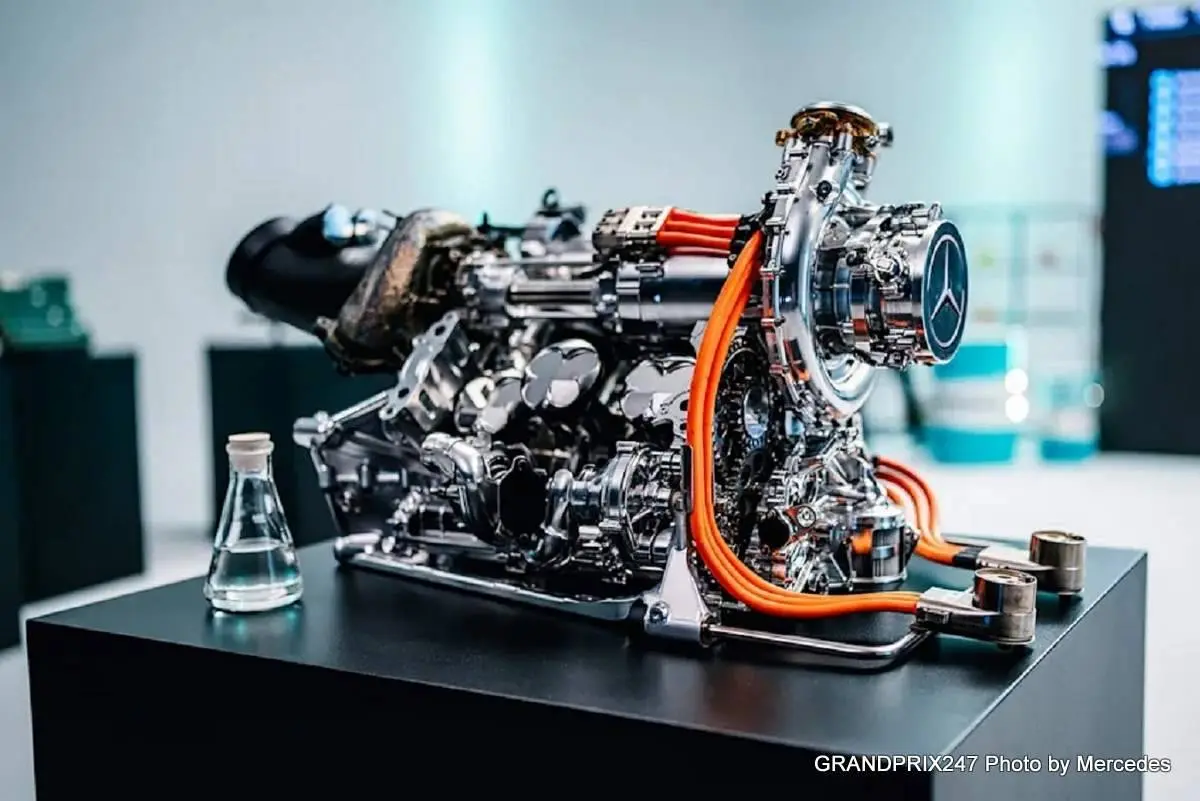
In 2021 F1 is regulated more than ever from a technical, sporting and now financial perspective, and some elements of sustainability are indeed addressed through this regulation; the hybrid power units, the operational cost cap and the July/August mandatory 14-day shutdown are prime examples of the FIA addressing the environmental, financial and human pillars accordingly.
Nevertheless, considering that even in the cost cap era it takes a combined staff level in the thousands and an operational budget in excess of GBP£1 billion to put 20 cars on the grid for a motor racing championship, it is clear that there is a disjoint when considering the reality that society is battling more fundamental issues such as global warming, pandemic disease and human injustice.
Anyone who has visited the F1 paddock on a race weekend in recent years and who has a conscience about this disconnect could only be disturbed by the gigantic motor homes, the elaborate catering spreads and the swarms of seemingly unnecessary PR professionals madly darting from one scrum to another whilst having no direct input whatsoever into the cars or the race.
Formula One prides itself on being innovative and has used advanced manufacturing methods such as composites since the late 1970s and early 1980s when companies such as Lotus and McLaren took the initiative, did the R&D and lead from the front with their pioneering of the use of carbon weave/epoxy resin matrices in the manufacture of their monocoques.
However, whilst F1 continues to justifiably remain reliant on composites manufacturing methods from a technical perspective, it has not moved with the times with respect to process innovation and continues to use large and inefficient autoclaves that use as much power per cycle as a small town when they could be using more sustainable and just as technically effective newer methods such as ambient resin transfer and infusion.
It is such a waste and only one example.
Often we think of reflecting on the past as being counterproductive because the push to move forward as time passes can make the past redundant, however, the past can also provide us with some valuable lessons in a time when we realise that we need to be doing things better.
In the 1980s and 1990s F1 teams would operate two-car teams with travelling trackside staff of no more than 30-50 people and overall company staff levels of 100-120 people and these numbers fade into insignificance when we consider the staffing levels and operational budgets of today's teams, even if they are cost-capped, and yet not only did they race, they researched, developed and innovated.
And yet, contrary to all this, both eras achieved the same objective; putting two cars on a Grand Prix grid for a season.
Once again, it seems such a waste.
A sustainable future is not one that THE world should take lightly and equally so it is important that F1 not only seen to be promoting a sustainable future from all fronts, but be noticeable in its tangible actions, and not just the big ones that they think people want to see.
After all, a sustainable future is probably not going to be to the benefit of us reading this article, but probably more so to the benefit of our children and grandchildren.
If you have any questions that you would like me to answer directly or just to drop me a friendly line, please feel free to email me via our contact form to Mark Kay and I will endeavour to respond as soon as I can.
Latest News



Loading