Facts, stats & tech review of the Russian Grand Prix weekend, Round 16 of the 2018 Formula 1 World Championship, at Sochi Autodrom.
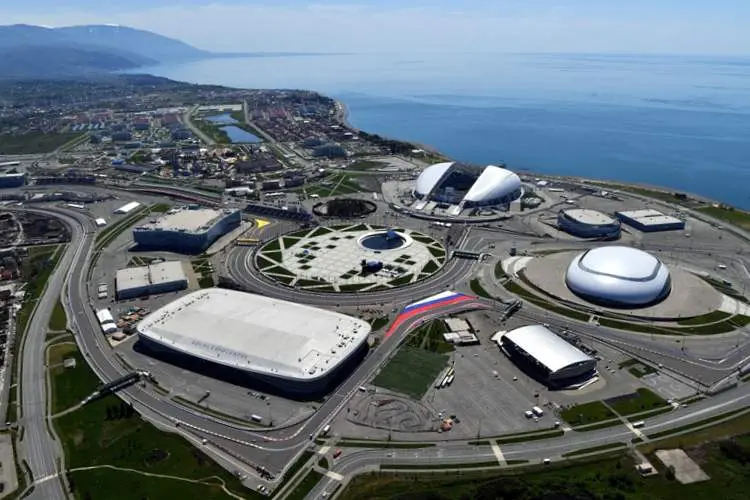
The 5.848-kilometer (3.634-mile), 18-turn circuit on the grounds of the XXII Olympic Winter Games is a vast departure from the track Formula One just visited – the Marina Bay Street Circuit in Singapore.
That course features 23 corners and is contested amid stifling humidity in a city center where in-car temperatures surpass 50 degrees Celsius (122 degrees Fahrenheit).
At the other end of the spectrum in terms of layout and environment is Sochi, which features wide corner approaches and relatively flat curbing that allows drivers to attack each apex amid much more comfortable temperatures, with highs only expected to reach 24 degrees Celsius (75 degrees Fahrenheit).
Despite these disparate natures, there is one element between Singapore and Sochi that remains the same – tires. Pirelli is bringing the same Yellow soft, Purple ultrasoft and Pink hypersoft tires used in the Singapore Grand Prix to the Russian Grand Prix.
The Essentials
- Focus Points: Straight-line speed. The cars exceed 320km/h (199mph) in the two DRS zones, so it’s vital to maximise straight-line speeds because these areas provide the best overtaking points on the lap. However, it’s also important to maintain good traction and braking performance because of the stop-start nature of the layout.
- Unique difficulty: Rear tyre wear. With so many short bursts of acceleration, the cars are rear-limited during the race stints. This is traditionally a one-stop race, partly due to the long and slow pit-lane – 60km/h (37mph) – so the engineers work hard to prolong tyre life during the practice sessions.
- Biggest challenge: The Hypersoft tyre compound. This is only the fourth time this year that the new-for-2019 Hypersoft tyre has been raced (in addition to Monaco, Canada and Singapore), and its longevity could prove critical in the race. The drivers that can make it last long enough to execute a one-stop strategy will be in a strong position.
Additional Sources: McLaren & Haas F1 Team Media
Reuters Statistics for Sunday’s Russian Formula One Grand Prix in Sochi:
- Lap distance: 5.848 km. Total distance: 309.745 km (53 laps)
- 2017 pole: Sebastian Vettel (Germany) Ferrari one minute 33.194 seconds.
- 2017 winner: Valtteri Bottas (Finland) Mercedes
- Race lap record: Kimi Raikkonen (Finland) Ferrari 1:36.844 (2017)
- Start time: 1410 local (GMT+3)
- Note: Last year’s race was in April.
Rusian Grand Prix
- Mercedes are the only team to have won in Russia since the first race in Sochi in 2014.
- Hamilton won in 2014 and 2015, Nico Rosberg in 2016 and Bottas last year.
- Until last year, Mercedes had led every lap at the circuit and started every race on pole. (Hamilton 2014, Rosberg 2015 and 2016).
- Bottas took the first fastest race lap of his F1 career in Sochi with Williams in 2014 while 2017 was his first win (in his 81st race).
- The Finn was also (with Williams in 2016) the first non-Mercedes driver to start on the front row in Sochi.
- The layout is designed by Hermann Tilke and runs clockwise around the 2014 Olympic Park venues, partly on public roads. There are 12 right and six left-hand corners.
- Williams’ Sergey Sirotkin is the only current Russian F1 driver.
- Russian president Vladimir Putin has attended every race in Sochi so far.
Grand Prix Victories
- Hamilton has seven wins this season to Vettel’s five. Daniel Ricciardo has two and Max Verstappen one.
- Hamilton has 69 victories from 223 races and is second in the all-time list behind seven-times world champion Michael Schumacher (91). Vettel, third on the all-time list, has 52 and Ricciardo seven.
- Ferrari’s Kimi Raikkonen has now gone 109 races since his 20th and last win, in Australia in 2013.
- Ferrari have won 234 races since 1950, McLaren 182, Williams 114, Mercedes 83 and Red Bull 58. Former champions McLaren and Williams have not won since 2012.
Pole Position
- Hamilton has a record 79 career poles, Vettel 55.
- Verstappen, who celebrates his 21st birthday on Sunday, can still become the youngest ever pole sitter although likely engine penalties are set to deny him the chance of being the first 20-year-old on pole.
- The current youngest is Vettel, who did it at 21 years and 72 days.
Podium
- Hamilton has 129 career podiums and is second on the all-time list behind Schumacher (155). Vettel has 108, Raikkonen 100.
- Mercedes’ Valtteri Bottas has had five second-place finishes this season.
Championship points
- Hamilton leads Vettel by 40 points with six races left.
- Mercedes are 37 points ahead of Ferrari in the constructors’ championship.
- Every driver on the starting grid has scored this season.
Milestone
- Hamilton can take his 80th pole on Saturday and 70th win on Sunday.

After three unusual circuit lay-outs, Sochi marks the return to familiarity for both teams and drivers, as the track contains very little elevation change and extensive run-off areas. However, in some respects, the challenges provided by the event are similar to those of Singapore, with tyre preparation on an out-lap in qualifying being critical to the performance over the ensuing lap. Overall, the lay-out is dominated by medium and slow speed corners which, together with two long straights, produce a layout not too dissimilar from that in Abu Dhabi.
Downforce vs Drag
- This is a power circuit and therefore, for those without a high power output, some highly drag-reducing set-ups may be employed. This refers particularly to McLaren, who tried such configurations in Italian practice, as well as Red Bull, who have both drivers starting from the back of the grid.
- At the same time, running very low wing levels for a higher top speed will hurt performance in the middle and final sectors, which place more emphasis on Aerodynamic downforce.

Car Strengths Needed
- As mentioned above, strong power output is critical to lap time, not only along the two long straights, but also in the acceleration zones out of the multiple medium speed corners in the middle sector.
- A lack of medium speed understeer is vital for performance. If this characteristic is not inherent in a car, then it may be necessary to run a more forward Aerodynamic balance than is natural, but this will result in poor traction in the final sector, potentially overheating the tyres during a qualifying lap.
Key Corners
- Turns 10 and 18 require good traction and subsequently strong power output to maximise speed down the ensuing straights and potentially set-up an overtaking opportunity.
- Turn 13 is difficult on entry, as the driver is turning to the left on the point of braking, making a lock-up easier. This is also one of the few turns where a driver cannot make much of a mistake without punishment, with Bottas close to hitting the wall while leading in 2017.
Tyres

- Pirelli is bringing the same tyre compounds to Russia as it did to Singapore – the softest two tyres, together with the Soft.
- Last year, the race was one of the most comfortable one-stop events of the year, with Hülkenberg managing 40 laps on a set of the UltraSoft tyres (this year’s SuperSoft) without a significant drop-off in performance. With this, plus the generally better 2018 tyre management, in mind, it should be expected that the UltraSoft will manage at least half race distance in 2018, while the Soft (last year’s SuperSoft) should comfortably be capable of the race distance.
- The major question coming into the weekend is the HyperSoft, which will undoubtedly provide a significant performance boost over one lap. If drivers can manage it to around lap 10, then running the US to the end is not out of the equation. Alternatively, a HS-S one-stop would be straightforward.
- For those starting outside the top ten, depending on the life of the HS, they may choose to avoid it completely.
- Renault have been particularly aggressive, with its selection suggesting that each driver will run the HS exclusively until the race, excluding one US/S run in FP2.

Overtaking/DRS
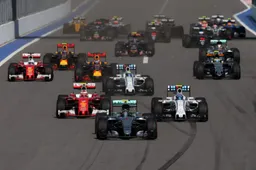
- Overtaking is extremely difficult in Sochi, despite the presence of two long DRS-assisted straights that are preceded by medium-slow speed corners. However, part of the problem lies in the fact that these straights are a long way apart from each other, so the driver behind must stay within close proximity over a number of turns.
- On the other hand, circuits like Spa and Monza feature back-to-back straights that allow the following car to close up on straight 1, and if they do not overtake, they are then much closer to have a chance on straight 2.
Weather
- Forecasts suggest dry weather on all three days, which is unsurprising considering the scarcity of rain in the first four Russian GPs. Temperatures are set to rise by a few degrees Celsius from Friday to the weekend, which will require some set-up adjustment to maximise tyre performance.
- Low winds should allow optimum set-ups to be reached more quickly, reducing noise in the data bank built up by drivers and engineers. However, the wind is scheduled to switch from Friday/Saturday to the race which could add some unpredictability.
Form Guide
- This track has historically been strong for Mercedes, with four wins from the four events so far. Last year, Ferrari’s pole position owed much to better tyre management than Mercedes, but this year, the tables have been turned in that regard.
- However, one area where Ferrari have made significant progress is on straightline speed performance, including more power, which should make them slight favourites for this weekend’s race.
- In the midfield, Force India, Haas and Sauber are likely to be strong, with a high emphasis on power, with Renault likely to be left defending in its battle for fourth place in the championship.
- Both Red Bull drivers will be taking power unit penalties as they return to the previous specification Renault engine, which will make their maximum results in an uneventful race fifth and sixth places.
loading
Latest News
Loading